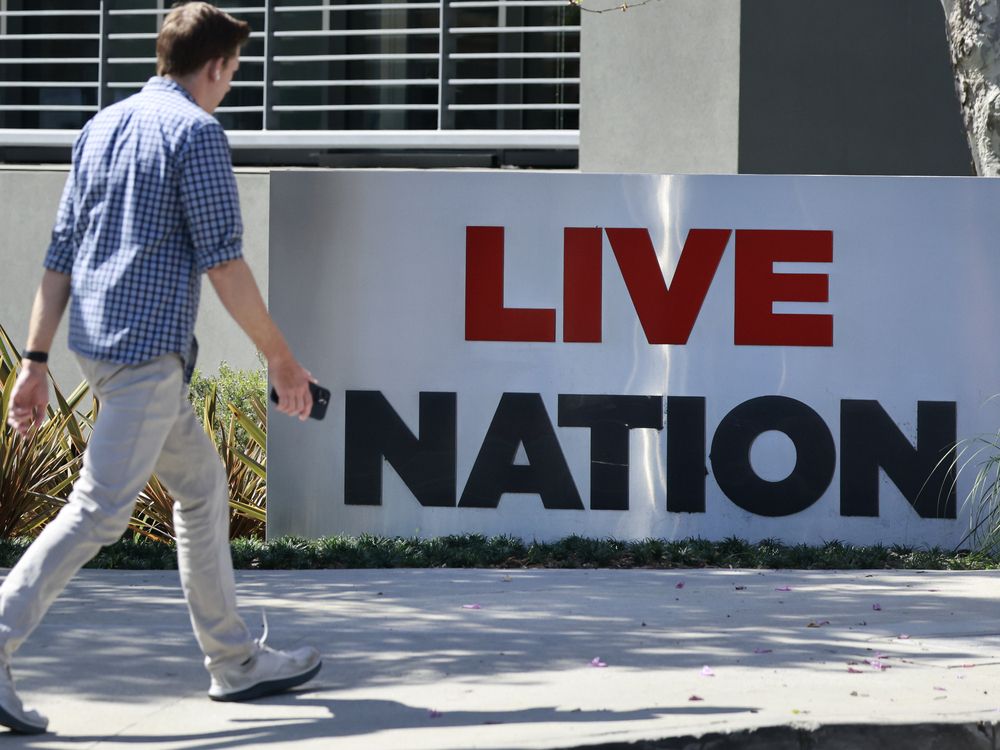
Michael Rapino had been slated to spend March 5 taking the stand in New York in the high-profile trial over the potential breakup of his US$40 billion company. Instead, the
Live Nation Entertainment Inc.
chief was in Washington, signing a last-minute, secret agreement to resolve the federal case.
That accord traced a winding path from an October meeting where the
made its case to Justice Department officials with the help of Kellyanne Conway, P
resident Donald Trump’s 2016 campaign manager
, and Ric Grenell, Live Nation board member and head of the Kennedy Center, according to people with knowledge of the meeting. According to court filings, negotiations “picked up” last month as the trial approached — and after the Trump administration ousted its former antitrust chief, Gail Slater.
The 11th-hour deal was so secretive it caught even the government’s own trial team by surprise. The judge called the way he was informed of it “mind-boggling.” And the drama isn’t over: rushed negotiations are still going on between the company and several states who’ve vowed to press on with the case even without the
.
The Biden-era case has been closely watched by policy wonks as a gauge of the Trump administration’s willingness to tackle corporate power and by people from the president to Taylor Swift and millions of music fans who feel frustrated by an expensive and unwieldy concert-going experience.
For many, nothing short of breaking up the company through the sale of Ticketmaster would solve the problem, an outcome the live entertainment giant would never willingly support.
The deal is another sign of the Trump administration’s stated preference for reaching settlements over long
. Indeed, DOJ leaders — including the number two and three officials Todd Blanche and Stanley Woodward — supported the case but preferred a settlement, according to people familiar with the matter. The pact has more concessions by Live Nation than what the company originally proposed, but isn’t as tough as a counterproposal Slater and antitrust lawyers drafted in January, some of the people said.
Contentious Circumstances
The circumstances surrounding the settlement negotiations have become highly contentious. In addition to a break up, state attorneys general are seeking hundreds of millions in damages and accused the company of “engineering” the deal’s announcement in a way that harms their ability to continue a trial that began last week.
On the morning of Friday, March 6 – hours after Rapino and Omeed Assefi, the acting head of antitrust, signed a deal – lawyers for Live Nation and the Justice Department told United States District Judge Arun Subramanian only that a settlement was close. It wasn’t until two days later, on Sunday evening, that the Justice Department informed him that a deal had been formally reached.
This story is based on
and interviews with almost a dozen people involved in the case who asked not to be identified discussing confidential negotiations.
Conway and Grinnell didn’t respond to requests for comment. Live Nation also didn’t respond to e-mail and phone requests for comments.
The White House declined to comment, referring questions to the Justice Department, which also declined to comment. New York, which is leading the state attorneys general, didn’t respond to a request for comment. California pointed to its earlier statement that it had “chosen to keep fighting for a better deal.”
At the early October meeting, the government was represented by Slater, along with Nicole Sarrine, the staffer overseeing the case, and Assefi, then-head of criminal antitrust enforcement, according to the people. Live Nation representatives at the meeting included Joe Berchtold, the company’s president, its head of regulatory affairs, Dan Wall, Conway and Grenell. While Live Nation had retained MAGA lawyer Mike Davis earlier in 2025 to aid with obtaining a deal, he had since been sidelined, having previously fallen out with Slater over a previous settlement. By not including him in meetings, Live Nation could avoid listing him on court papers accompanying any settlement. Davis didn’t respond to requests for comment.
Conway and Grenell argued that a settlement was the most desirable outcome, playing up both Trump’s general desire for dealmaking and his
personal interest in the entertainment business
, but they weren’t involved in the specifics of the settlement, some of the people said.
Two weeks after the meeting, Live Nation submitted a written settlement proposal, according to court filings. That included extending court oversight from a prior consent decree, eliminating an allegedly anticompetitive partnership with venue owner Oak View Group, allowing rival promoters into Live Nation-owned venues, and limits on Ticketmaster’s exclusive contracts, according to some of the people.
When Live Nation didn’t hear back before the end of the year, the company in mid-January deployed Conway – an aide to Trump during his first term – to nudge the Justice Department about a response, some of the people said.
After Conway spoke to Slater, the Justice Department sent Live Nation a counterproposal on Jan. 29. That included demands that Ticketmaster create software for venues that would allow rivals to
simultaneously sell tickets and the sale of some concert venues
owned by the company, some of the people said.
White House Informed
The White House was kept in the loop on the status of a potential settlement, some of the people said. Justice Department career staff, but not the case team, were involved in vetting the current settlement, one of the people said.
The states said they learned about the discussions the following day and both the DOJ and Live Nation declined to give them details of the talks, according to court filings. Everyone continued preparing for trial.
Slater’s ouster complicated pretrial settlement talks, creating the possibility that regardless of the terms, it would appear that she was pushed out just so the company could cut a deal, some of the people said.
The Justice Department appointed Assefi as the acting assistant attorney general. A former prosecutor with the U.S. Attorney’s office in DC, Assefi joined the antitrust division in late 2024 focused on criminal antitrust enforcement. He headed antitrust on an acting basis for about two months between Trump’s inauguration and Slater’s confirmation in March 2025.
Concerned that Slater’s removal presaged a Live Nation settlement, several attorneys general publicly pledged to continue with the case even without the Justice Department.
In its own court filing, Live Nation said negotiations “were close enough to a deal” the weekend before trial that it asked the Justice Department to inform the court and delay jury selection, but the agency declined to do so.
As jury selection began in New York on Monday, March 2, Assefi met with attorneys for the states and assured them no settlement was imminent, the states said in a court filing. In a meeting with Subramanian in his chambers after the jury was selected, Live Nation’s Wall said the parties were close to a deal. When the Justice Department’s lawyers could provide no details, Subramanian ordered Assefi to appear before him the next morning.
Assefi said he couldn’t attend, citing work commitments, and instead sent his deputy Sarrine, who told the judge Tuesday morning that negotiations were ongoing. Subramanian allowed the trial to continue.
After opening arguments on Tuesday, attorneys for the states’ leadership group — California, New York, Tennessee, Florida and the District of Columbia — attended a negotiation with Live Nation’s lawyers where for the first time they received a hard copy of proposed settlement terms.
Binding Agreement
On Thursday, Assefi and Rapino met in person at the Justice Department in Washington to discuss the settlement. At the end of the negotiations, both signed a “term sheet,” a binding document outlining the main aspects of the agreement, and gave the states 24 hours to sign on.
While Rapino was originally scheduled to testify on Thursday, the DOJ trial team was told on Tuesday to remove him from that week’s witness list, according to some of people.
On Friday morning, the parties again met with Subramanian in chambers to discuss the settlement. Neither the Justice Department nor Live Nation told the judge that a term sheet had already been signed. Both Wall, Live Nation’s executive at the trial, and Sarrine later said they weren’t aware of the signed agreement when they briefed Subramanian on Friday.
Over the weekend, Live Nation and the Justice Department lawyers continued to work along two tracks: preparing for the upcoming week’s testimony, and on a settlement. New York’s Elinor Hoffman – an attorney on the state settlement committee – said that no one from the Justice Department spoke to them about the deal over the weekend.
A Justice Department official who asked not to be named said that some of the feedback the states provided during their Tuesday negotiation was incorporated into the term sheet that was ultimately signed. The official acknowledged the states weren’t consulted over the weekend after the deal was signed.
On Sunday evening, a little before 8 p.m., the Justice Department emailed the judge to tell him that it had reached a settlement with Live Nation.
Furious Judge
In court Monday morning, a furious Subramanian demanded to know why no one had told him about a deal before Sunday night and why he wasn’t given the actual term sheet until that morning.
Live Nation and the Justice Department “have failed to disclose any information concerning these discussions to the Court when proper disclosure, timely disclosure” was needed, he said.
The states unsuccessfully urged Subramanian to delay the case for 60 days to allow them to prepare for a new trial, while the judge lambasted Rapino and Assefi on Tuesday morning over the process. “This just is hard to understand.”
The judge declined to grant a mistrial, instead ordering Live Nation’s Rapino to remain in New York and negotiate with the states about a potential settlement. If those negotiations fail, he said, the trial will return on Monday.
In the meantime, the states’ leadership group spent the week in the New York attorney general’s offices negotiating with Live Nation. They also brought in a team from the law firm Winston & Strawn to help litigate their case when the trial resumes.
The Justice Department said it intends to turn the agreement into the formal legal filing Subramanian will review under a transparency law known as the Tunney Act. Such formal court filings and a press release are typically filed at the time of a settlement announcement, another example of the unusual nature of the settlement process in the Live Nation case.
The law requires the government to outline why it believes an antitrust settlement is in the public interest and allows the public or other interested parties to weigh in. It also requires the companies involved to detail all their contacts with the executive branch.
The states and Live Nation will be in court later to update the judge on their negotiations. In the meantime, the two sides were arguing over witness lists on Thursday night.
—With assistance from Lucas Shaw, Nancy Cook and Courtney Subramanian.