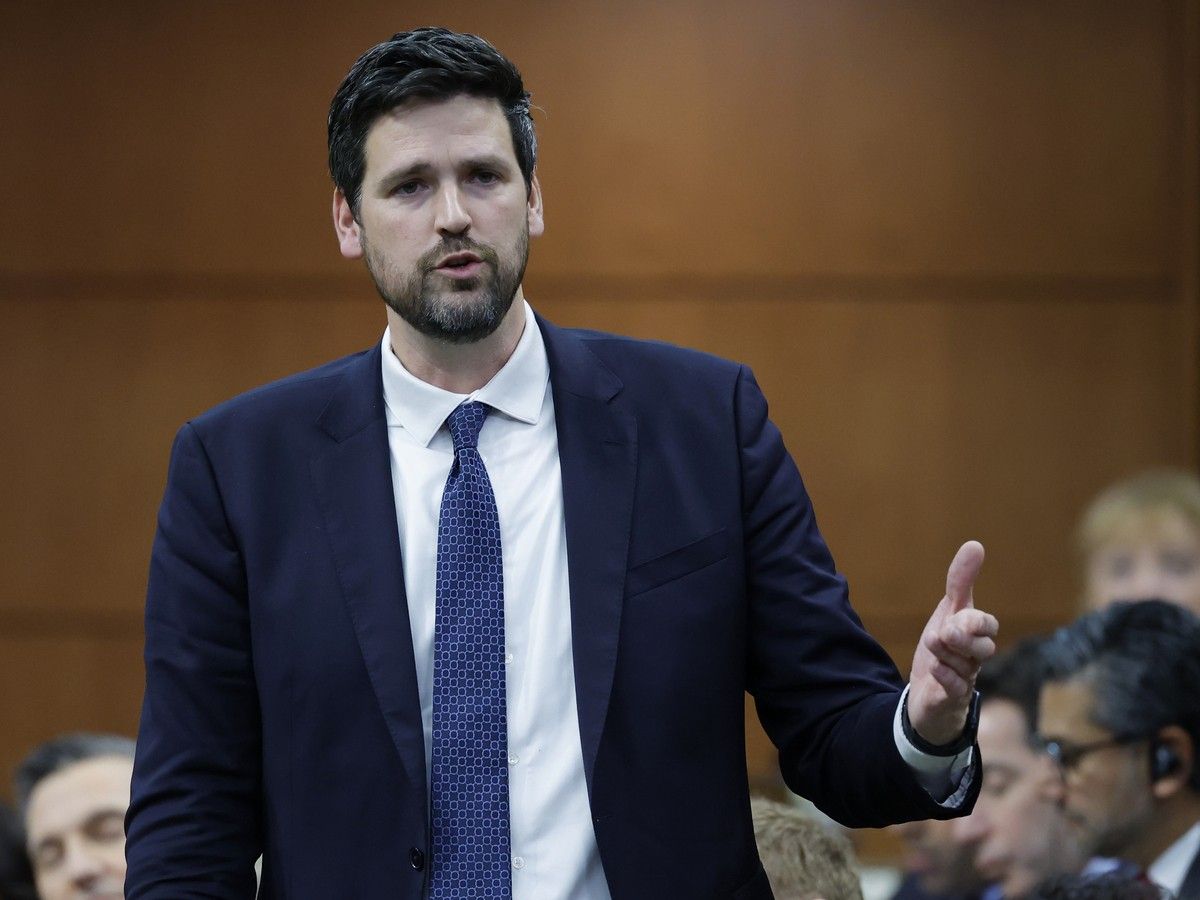
OTTAWA — Canada’s justice minister expressed an openness Tuesday to expanding the government’s definition of sexualized deepfakes, as opposition MPs push for amendments to the proposed law to criminalize their distribution.
Sean Fraser spoke one day ahead of when parliamentarians on the justice committee are expected to begin their clause-by-clause study of Bill C-16, the Liberals’ latest justice legislation that, among other reforms, seeks to update the Criminal Code definition of an “intimate images” to include those that are a “visual representation.”
“I would like to make sure that those proposed amendments or revisions are based on the testimony that came before the committee, to ensure that it’s informed by expert testimony,” he told reporters after Tuesday’s cabinet meeting.
Targeting the distribution of sexual images made by “ electronic or mechanical means” is how Prime Minister Mark Carney is looking to fulfill his promise made during last year’s federal election campaign to criminalize the act of distributing “sexualized deepfakes” of someone without their consent.
The term largely refers to sexual images made using generative AI, a phenomenon police, school board and advocates against gender-based violence have been warning for years has been increasing.
The Liberals specifically touted its latest justice bill, an omnibus piece of legislation that also targets mandatory minimum sentencing and stiffer punishments for certain offences, for its efforts to target sexualized deepfakes.
But advocates and experts who testified before the parliamentary justice committee warned that the government’s definition was too narrow and risked not capturing images that could be found too unrealistic. They questioned its ability to address the spread of images in which someone may not be fully naked but “nearly nude,” as were shown could be created by Elon Musk’s Grok AI chatbot on X.
Witnesses also called on the MPs to target not only the distribution of such images, but their very creation.
NDP MP Leah Gazan confirmed her party intends to present amendments on Wednesday to widen the government’s proposed scope.
“It needs to be expanded,” Gazan said Tuesday, “certainly around nudes, certainly clarity around the definition about what a deepfake is.”
“It’s still unclear in the bill.”
The Conservatives are also eyeing changes, with Ontario MP Larry Brock, who sits on the justice committee, suggesting that the party’s other members on the committee had amendments coming to deal with the issue.
Fraser told reporters that the government based its definition on the Criminal Code’s wording around the spread of the non-consensual sharing of intimate images, commonly known as “revenge porn.”
The minister said the Liberals wanted to “mirror” that language as “there is significant jurisprudence on this issue, drawing precisely where the line may exist as to what ought to be criminal and what ought not to be criminal.”
Fraser said while he was open to changes, he did not “want to compromise on the timeline to the point where we’re now kicking this bill into the fall.”
The Liberals’ bail bill, which seeks to tighten the rules around pre-trial release for more offences, is still being studied by the Senate.
The Upper House, which can amend legislation that the government would have to decide whether to accept, must also deal with the Liberals’ anti-hate bill, C-9.
That legislation has proved contentious because of a Bloc Quebecois amendment that the Liberals adopted while still having a minority in Parliament to see the bill pass, which scrubbed religious defences from the Criminal Code for certain hate-speech crimes.
The government’s move touched off fierce pushback from religious communities and the Opposition Conservatives, which the Liberals have sought to blunt through clarifying in the bill that the Charter guarantees protection for religious freedoms.
National Post
Our website is the place for the latest breaking news, exclusive scoops, longreads and provocative commentary. Please bookmark nationalpost.com and sign up for our politics newsletter, First Reading, here.