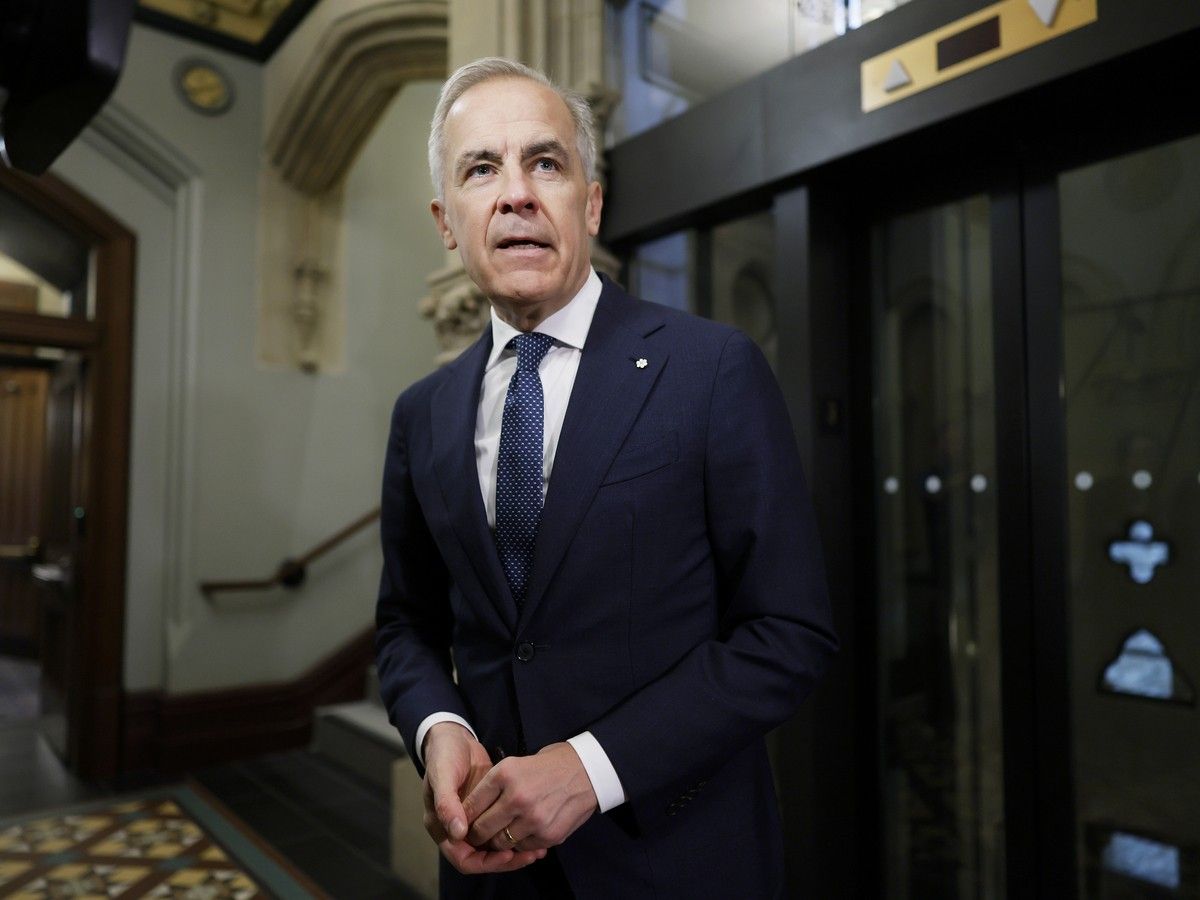
OTTAWA — Prime Minister Mark Carney’s spring fiscal update showed a smaller than projected budget shortfall of $66.9 billion for the fiscal year that just ended, thanks to a Canadian economy that performed stronger than expected and increased personal and corporate income tax revenues.
Tuesday’s deficit figure is $11.4 billion below what was projected in the fall, with Budget 2025 initially projecting a $78.3-billion deficit for 2025-2026, the highest deficit outside of the pandemic.
However, the Canadian economy has proven to be more resilient and the conflict in Iran has led to higher oil prices, which in turn led to a boost in revenues.
“Today, we’re restoring fiscal discipline,” said Finance Minister François-Philippe Champagne, during a press conference in Ottawa on Tuesday. “These are serious times, and Canadians expect prudent fiscal management.”
The fiscal update showed that revenue projections compared to Budget 2025 have increased by an average of $7.2 billion annually over the next five years.
However, the government has decided to spend most of that windfall, with new measures outlined in the spring update projected to amount to $37.5 billion in net new spending over the next six years.
The finance minister defended the spending, noting that most of that new funding is targeted at affordability measures.
“We have decided, at a time like that, that Canadians needed support with respect to affordability,” said Champagne. “Affordability is 50 per cent of it.”
The deficit in Tuesday’s fiscal update is projected to remain elevated at $65.3 billion this fiscal year before declining to $53.2 billion in 2030-2031, slightly lower than what was expected in Budget 2025.
Finance Canada figures peg the federal debt at $1.333 trillion last fiscal year and it is expected to rise to $1.629 trillion by the end of the decade.
The federal government is on track to meet its two fiscal anchors: balancing operating spending with revenues by 2028-2029 and maintaining a declining deficit-to-GDP ratio.
The debt-to-GDP ratio is projected to hit 41.5 per cent in 2026-2027 and will remain elevated for the remainder of the decade, finishing at 41.6 per cent in 2030-2031. The federal government has made no commitment to bring this ratio down, which is a fiscal anchor previously held under former prime minister Justin Trudeau.
Public debt charges, the interest the federal government pays on its debt, are anticipated to hit $58.7 billion in 2026-2027, rising to $80.7 billion by 2030-2031.
Affordability measures in the update include the Canada Groceries and Essentials Benefit, and the temporary suspension of the Federal Fuel Excise Tax, both come at a combined cost of over $14 billion in the next six years.
Other new measures in the update include funding for skilled trades people, an effort by the government to address the skills shortage, that will directly impact its major projects and housing agendas.
There is also funding to set up a financial crimes agency and to make the new Defence Investment Agency a stand-alone entity.
Carney previewed the spring update with an announcement on Monday that his government intends to create a sovereign wealth fund, the so-called “Canada Strong Fund.”
Despite promises of more specifics in the spring update, there were few details on how the fund will be set up.
There were also no updates on the federal government’s ongoing comprehensive expenditure review, as part of the government’s commitment to find $60 billion in operational savings over the next five years.
The update did announce that the federal government will cut spending on external management and other consulting by 20 per cent over the next three years, providing $450 million in savings in 2027-2028 and $900 million 2028-2029.
Overall, risks remain for the government’s fiscal and economic outlook. Trade uncertainty with the United States and the geopolitical uncertainty in the Middle East could present downside risks to Canada’s economic growth.
The federal government’s economic scenarios in the update show that a prolonged global supply disruption brought on by the conflict in the Middle East could deteriorate Canada’s finances. A second scenario shows stronger global demand for reliable energy increases investment in Canada, which in turn boosts the federal government’s fiscal position.
National Post
Our website is the place for the latest breaking news, exclusive scoops, longreads and provocative commentary. Please bookmark nationalpost.com and sign up for our daily newsletter, Posted, here.