
Twenty-six more Canadians who were on a flight with a confirmed case of hantavirus are now being contacted by public health officials but are considered to be at “low or minimal risk” of infection because of where they were seated, federal health officials said Thursday.
While the outbreak associated with the MV Hondius cruise ship is evolving, the risk to the general population in Canada remains low and “further spread of the virus within Canada is not expected,” Canada’s chief public health officer, Dr. Joss Reimer, said.
“But given the severity of the symptoms of the virus, we are taking a precautionary approach to ensure that Canadians are protected,” Reimer told reporters.

Some Canadians already isolating were travelling on a Saint Helena-Johannesburg-Amsterdam flight taken by a Dutch woman April 25 after her husband died while at sea.
When the ship docked in Saint Helena, the woman boarded the flight to Johannesburg, but was then taken off the connecting flight to Amsterdam when she started to show symptoms. She died the next day in hospital in South Africa. Dutch media have reported that passengers who sat in the same row as the woman or in the two rows in front and two rows behind her are considered high-risk contacts who should be in quarantine.
The 26 newly identified travellers were deemed by local European public health authorities as being “no risk,” Reimer said.
“Again, in Canada we are taking a precautionary approach, and we have deemed them to minimal or low risk as opposed to no risk,” she said.
The provinces and territories are contacting all 26 to make sure they’re aware that they were on the affected flight and what symptoms to watch for. However, Reimer said she is not directing that they self-isolate but added that local public health officials could recommend isolation following a more thorough risk assessment.
“I would also like to flag that we do not have any evidence that shows that the virus can spread from asymptomatic people. There is no reason for us to be concerned about contacts of contacts at this time,” Reimer said. “Our concern rests with individuals who were exposed to a confirmed or probable case,” she said.
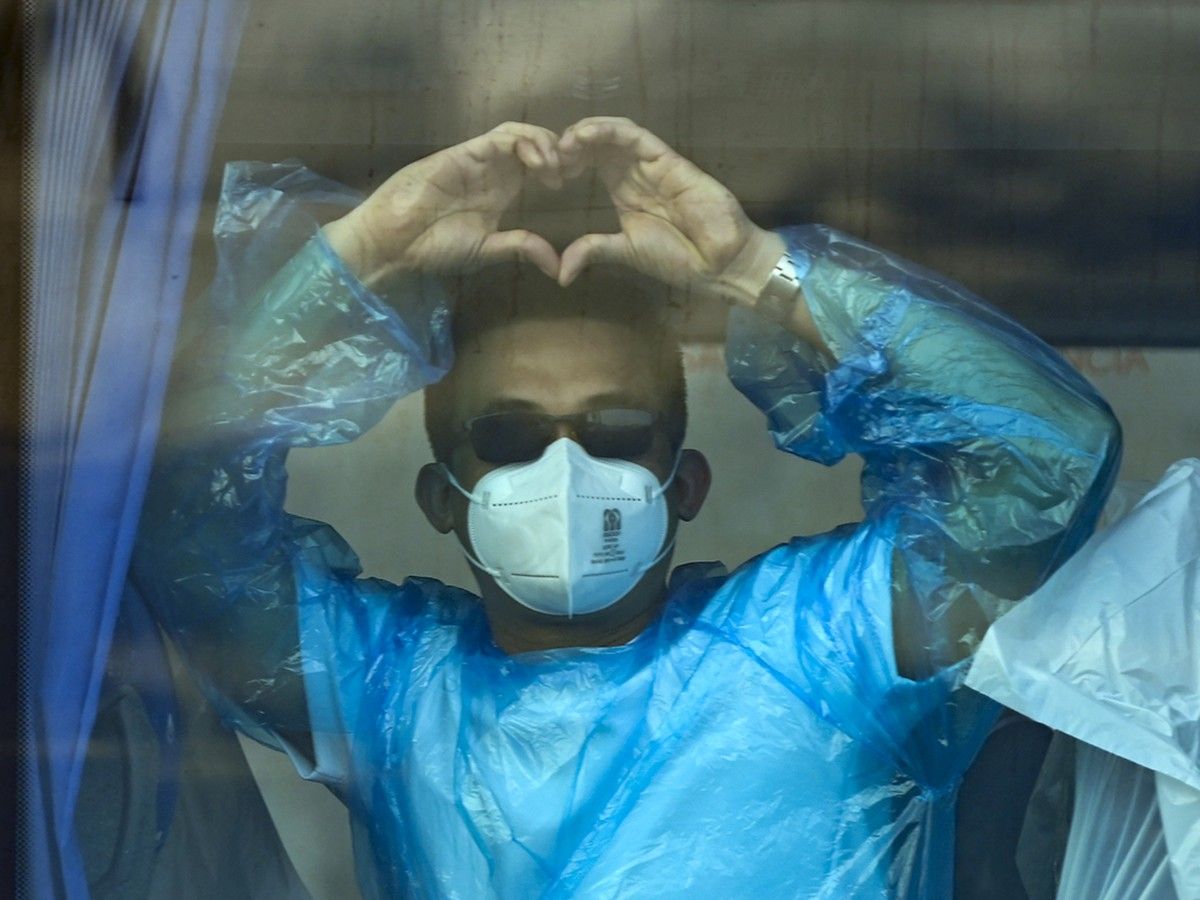
As of Thursday, there are nine people in Canada considered to be high-risk contacts and who have been told to self-isolate. Seven others in Ontario are also isolating: “low-risk” contacts who came into contact with high-risk people.
Federal officials announced earlier this week that temporary measures are being taken to prevent any passengers and crew who were aboard the virus-hit ship that departed Argentina on April 1 from boarding a flight to Canada until June 17.
Almost 150 passengers and crew from 23 countries had been stranded on the cruise ship for weeks following the outbreak of the Andes strain of hantavirus.
As of Wednesday, a total of 11 cases, including three deaths, have been reported — eight lab-confirmed for the Andes virus, two probable and one inclusive that’s undergoing more testing. “At the moment, there is no sign that we are seeing the start of a larger outbreak, Dr. Tedros Adhanom Ghebreyesus, director-general of the World Health Organization, said at a press briefing earlier this week. “But of course, the situation could change.” The virus has a long incubation period, up to 45 days.
A family of viruses carried primarily by rodents, hantaviruses can cause severe disease in humans, including hantavirus pulmonary syndrome, a severe respiratory illness that can appear up to six weeks after being exposed to the virus and carries a high case fatality rate of between 20 and 40 per cent.
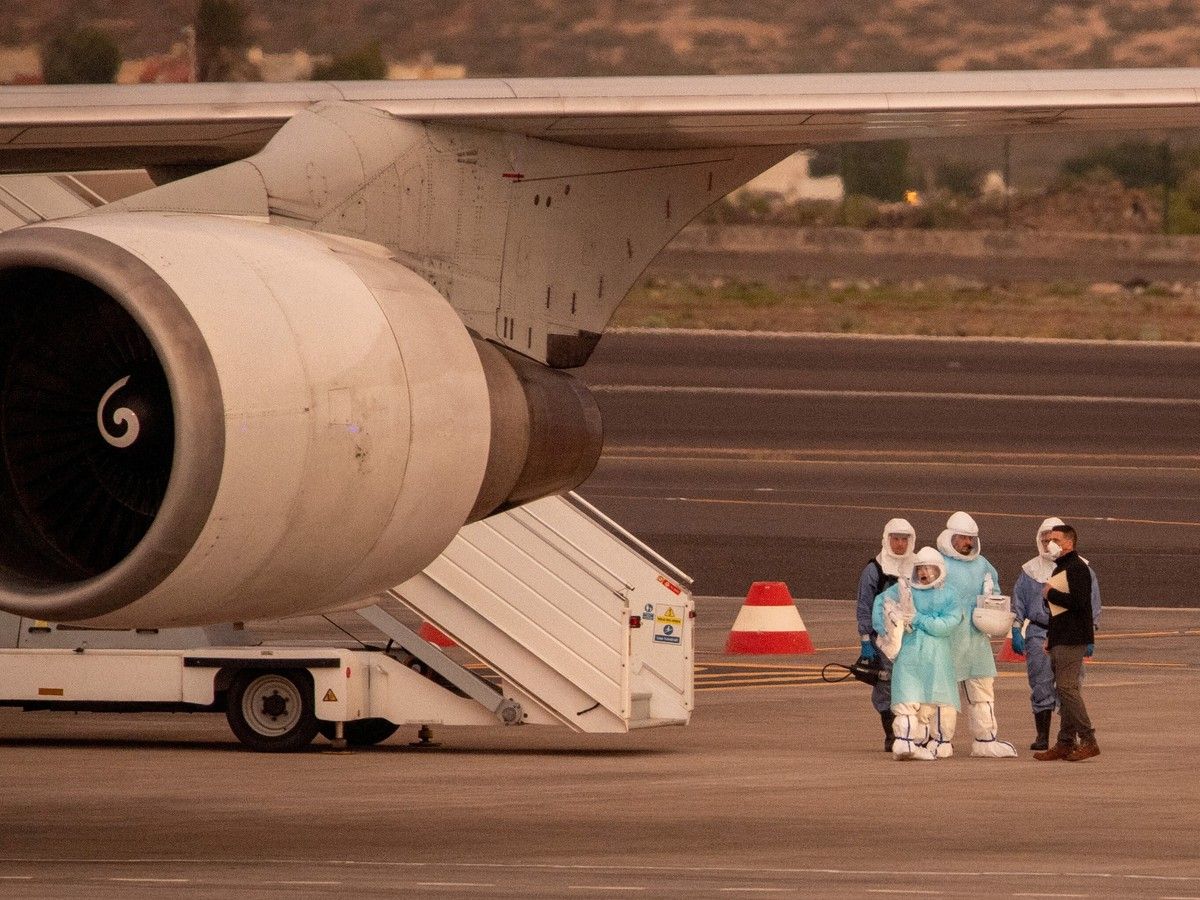
People usually get infected by breathing in “microscopic particles” of urine, droppings or saliva from infected wild rodents, Stanford Medicine News reports. While human-to-human transmission can occur, the Andes strain isn’t thought to be particularly efficient compared to airborne transmission of diseases like measles, COVID-19 or influenza. It’s thought to require more sustained close contact.
Since 1989, there have been at least 109 confirmed cases and 27 deaths in Canada due to a hantavirus. Early symptoms include cough, fever, muscle aches, fatigue, chills and headaches that, in more serious cases, can lead to worsening shortness of breath.
The Andes virus doesn’t appear to be exhibiting qualities that make it a high pandemic risk. “Efficient (human-to-human) transmission is the critical parameter that defines pandemic potential,” Matthew Miller, scientific director of the Michael G. DeGroote Institute for Infectious Disease Research at McMaster University told National Post this week.
“Efficient transmission doesn’t seem to be there.”
Given the long incubation period — up to eight weeks — it’s possible more cases could emerge globally but most experts agree that the hantavirus doesn’t pose a pandemic risk, Reimer said.
For now, people who are isolating but who are not showing symptoms aren’t being tested because of the “false reassurance that a negative result can provide,” Reimer said.
“If somebody is, perhaps, testing negative but later could go on to develop hantavirus, I don’t want that individual to be taking their isolation requirements less seriously,” she said.
National Post
Our website is the place for the latest breaking news, exclusive scoops, longreads and provocative commentary. Please bookmark nationalpost.com and sign up for our newsletters here.