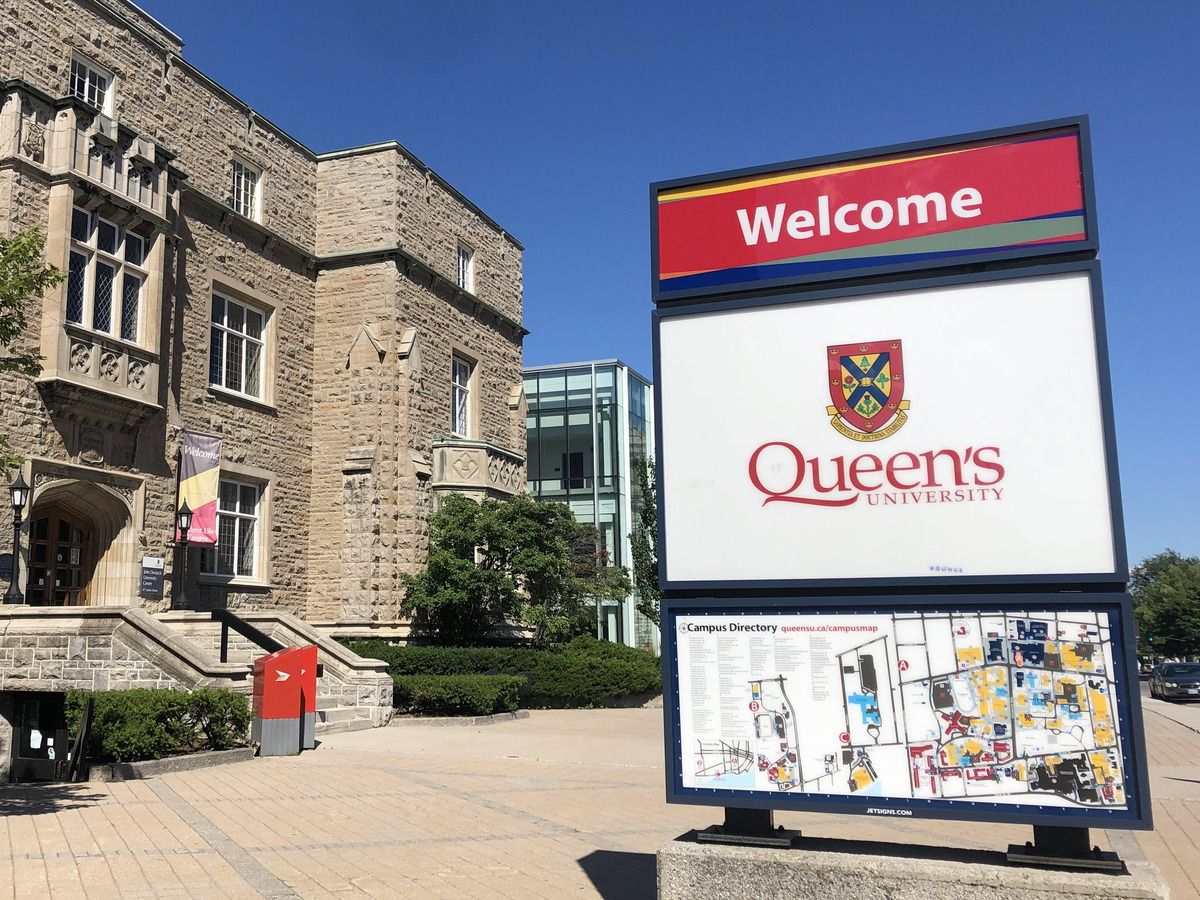
A group of retired employees of Queen’s University in Kingston, Ont., say the transition of their pension to the new University Pension Plan mega fund has left them feeling shortchanged in the face of rising inflation .
Queen’s was one of three universities to fold their retirement funds into the newly created and professionally managed multi-employer fund that was launched in 2021 amid concern over the sustainability of university pensions in Ontario.
The intent of joining the UPP was to address funding shortfalls, maintain defined benefit pension plans that guaranteed payouts for retirees, and tap into the benefits of investing at scale .
But the retirees say the Queen’s pension’s indexation formula — which was tied to performance and maintained after the merger — did not mesh with UPP’s investment style, leading to stagnating payouts in recent years.
“Significant concerns have been expressed by RAQ (Retirees Association of Queen’s) members following receipt of the 2025 pension adjustment letters that showed that UPP investments delivered a very disappointing three per cent net fund return for 2024/25,” the co-chairs of the association’s pension and benefits committee wrote in a spring 2026 newsletter viewed by the Financial Post.
“Since 2021, when management of our pensions was assumed by the University Pension Plan (UPP), little or no increase in pensions has been seen.”
Not all pension payouts are indexed to help keep up with inflation, but Queen’s had a formula for conditional indexation that was brought over to UPP for those employees and retirees. The formula is based on investment performance and provides for an increase to a retiree’s base pension if an average return target is met over a rolling four or six year period, depending on when the individual retired.
A strategy of investing of investing heavily in public equities meant the target was met much of the time as stock markets roared ahead for much of the past quarter century — with the exception of 2008 financial crisis. As a result, Queen’s retirees received additional payouts for many years with their standalone pension.
However, under UPP, the fund’s investments shifted to include private assets such as infrastructure and real estate. That transition to a more diversified portfolio aimed at weathering a range of market conditions while mitigating risk has also come with a choppier path of gains and losses since 2021, including a 9.1 per cent net loss in 2022.
Fed into the performance-based formula, those figures have meant former Queen’s employee Gordon Crawley has received no increases since he retired in November 2021. Meanwhile, the consumer price index (CPI) has risen by more than 16 per cent over that time frame, according to Bank of Canada data.
Crawley worked as an operating engineer in the central heating plant at Queen’s until he retired the same year UPP was launched after 37 years with the university. He says it’s been difficult, especially knowing he won’t get any additional payments to top up his pension and help deal with inflation until the fund’s returns have made up for lost ground.
A UPP statement he received says that any shortfall for years when the return is calculated at less than the target level of six per cent has to be made up by future returns before new increases can happen.
“I am very concerned about the future, so concerned that I have had to have serious discussions with my children about the possibility of selling my house and moving in with them,” he said.
“With inflation rising every year and my pension staying stagnant, my financial security is waning…. I am concerned about being able to continue taking care of my financial responsibilities and my family.”
Inflation has taken a couple of notable upward swings in recent years. After the COVID-19 pandemic in 2020, countries including Canada experienced a spike in inflation that was expected to be short-lived but persisted, causing central banks to raise interest rates. Food prices have also continued to rise in Canada, putting a strain on some households, while the war in the Middle East that began in late February caused oil prices to soar, which has caused inflation to rise again.
“We recognize that periods with little or no increases, particularly in a higher inflation environment, can be challenging for retirees,” a spokesperson for UPP said, noting that it has always been a feature of the Queen’s pension that increases are not directly tied to inflation and can vary year to year.
She said the structure also ensures that pensions being paid out don’t decrease, and added that the return-based indexation formula used by Queen’s can deliver materially higher increases in periods of low inflation than calculations based on the CPI, which are used by UPP and its other participating universities.
“While CPI-based indexation may appear more favourable in periods of higher inflation, the inverse has also been true,” she said.
Michelle Lewis, director of media relations and issues at Queen’s, responded to questions about the indexation formula and whether changing it is under consideration with an emailed statement that said the university “remains engaged” with the University Pension Plan.
“(This involves) ongoing dialogue to better understand its long-term investment strategy and how it supports the interests of its members, including those from Queen’s,” she wrote.
The choppier returns haven’t had the same impact on conditional indexation for UPP members from the universities other than Queen’s because their formulas — also kept in place after the merger with UPP — are based on the consumer price index (CPI) rather than the pension fund’s performance. And any pension benefits accrued since UPP was formed are subject that same CPI-based formula, even for Queen’s employees.
The creation of the multi-employer UPP — initially with Queen’s, the University of Toronto and Guelph University and later expanded to include six post-secondary institutions and others in the sector, with total membership exceeding 44,000 — was promoted by Queen’s in 2021 as a way to address the financial challenges facing university pension plans that would allow employees to keep defined benefit pensions. At the same time, proponents said cost-savings and investment opportunities would come with scale and professional management in addition to advantages like increased career flexibility and pension portability.
Another selling point was that employees and employers would share responsibility for decision-making about the terms and conditions of the plan going forward.
Kenneth Kroner, a veteran investment professional and former acting chair of Alberta Investment Management Corp. (AIMCo), said pensions that can invest and manage funds at scale generally deliver better security for pensioners. Moreover, using conditional indexation formulas based on fund performance has some merit because it ensures payouts aren’t made if returns aren’t there to back them.
“Supporters probably argue that protecting the endowment is good for future retirees, and therefore best in the long run,” he said, adding that this line of thinking holds up even if when it comes at the expense of current retirees as Queen’s is experiencing.
But he said there is also a case to be made for changing the CPI-based indexation formula used by UPP and the universities other than Queen’s because if the pension pays current retirees higher benefits than the fund is able to afford, it will only create future problems.
“One formula — Queen’s’ — bases increases only on the ability of the fund to pay, while the other formula — CPI — bases increases only on the needs of the beneficiaries,” he said. “But my view is that both should be considered in the formula. So if I were ‘king for a day,’ I’d be changing both formulas.”
• Email: bshecter@nationalpost.com