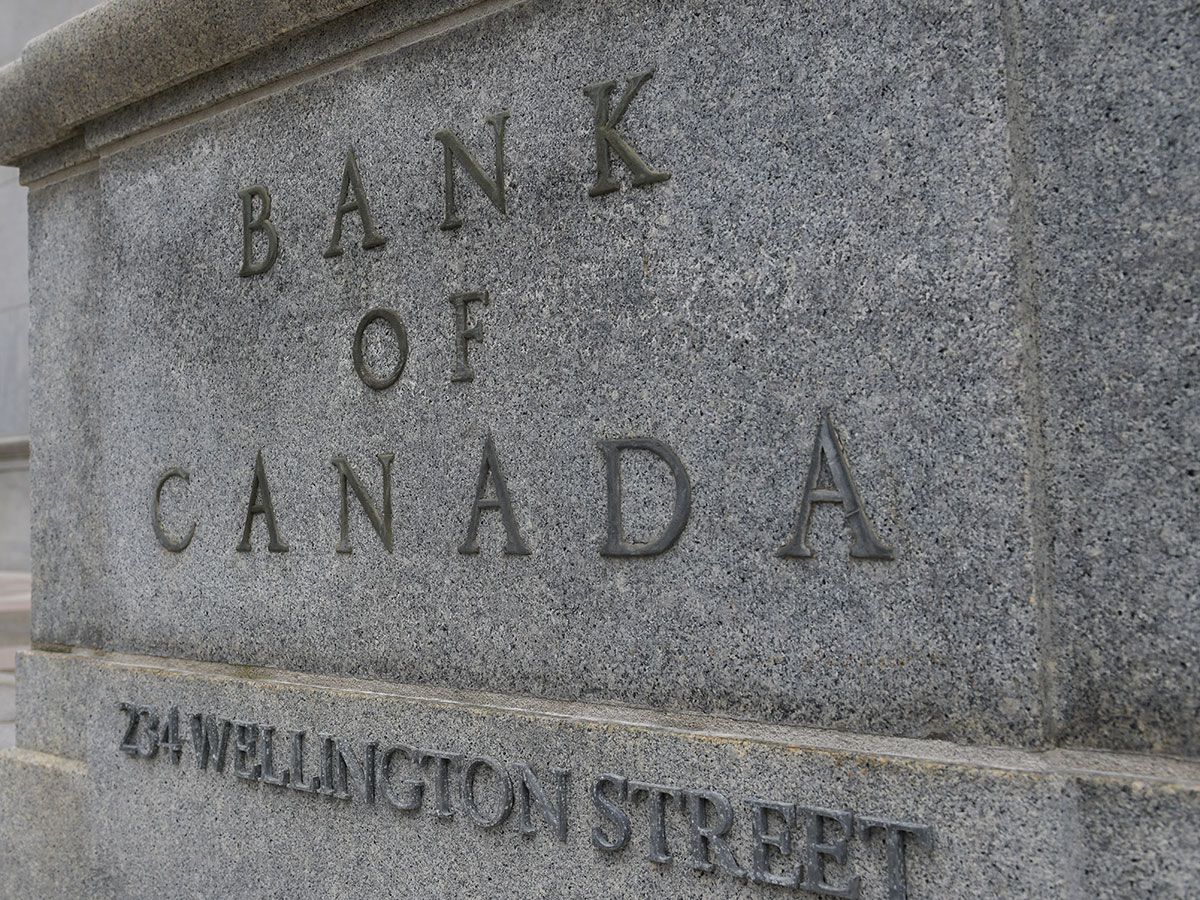
Ottawa’s budget watchdog’s new economic outlook projects the Bank of Canada will hold its key interest rate steady through 2026 before gradually raising it to 2.75 per cent by the end of next year.
The Office of the Parliamentary Budget Officer ‘s report published Thursday said it expects the central bank to hold fire through 2026 as the economy continues to operate “below its productive capacity” and inflation stays elevated due to higher energy prices.
As supply disruptions from the Iran war ease and inflation returns to the two per cent target, the bank will gradually raise interest rates from 2.25 per cent to 2.5 per cent by mid-2027 and 2.75 per cent by the end of the year, said the PBO.
However, if energy prices remain high for a sustained period of time, the Bank of Canada may take a “tighter monetary policy stance” to manage inflationary pressures , the outlook said. Bank governor Tiff Macklem made similar comments before a parliamentary committee in April.
“The economic outlook has weakened somewhat compared to our September projection due to enduring trade frictions and higher uncertainty,” Thursday’s economic outlook read.
“We expect growth to remain subdued through 2026, before gradually recovering as net exports begin to rebound from depressed levels.
“Persistent uncertainty is expected to continue weighing on business investment and household spending, and slower population growth is reducing potential output growth in the short term.”
The PBO report comes the week before the Bank of Canada is set to announce its latest decision on its interest rate. Soaring oil prices and the uncertainty surrounding U.S. tariffs were top of mind for the central bank’s governing council in April, with some members concerned about the impact on the economy.
Despite this, economists expect the central bank to hold its key overnight rate at 2.25 per cent on June 10 for the fifth time in a row.
“At this point, it’s too early to respond to the weakness in the economy with a rate cut, but the economy also doesn’t require any monetary tightening right now,” said Royce Mendes, head of macro strategy for Desjardins Group.
Economists, however, are split on whether and when the bank will hike interest rates next year.
CIBC’s most recent forecast expects the Bank of Canada to hold the interest rate through 2026 and most of 2027 before raising it to 2.75 per cent by September 2027.
Desjardins Group economists predicts the first rate hike will come earlier, in the first quarter of 2027, and then rise to 2.75 per cent. Mendes said the economy should “return to full health” as Canadian and U.S. officials eventually strike a deal on the Canada-U.S.-Mexico Agreement (CUSMA) and the fiscal stimulus embedded in Budget 2025 starts to hit the economy.
Mendes also forecast modest population growth next year, which will help drive economic growth.
“For all of those reasons, we see the economy returning to full health, and the central bank can then normalize interest rates to 2.75 per cent,” he said in an interview.
“We think that will happen in the second and third quarter of 2027, and that gets the central bank to a neutral interest rate, where you’re not stimulating the economy and you’re not restraining the economy.”
Both Bank of Montreal and Toronto Dominion Bank expect the interest rate to remain at 2.25 per cent through 2026 and 2027.
BMO economists Michael Gregory and Jennifer Lee said the weak economy and labour market should act as “inflation pressure sponges,” while there is still significant uncertainty ahead in trade negotiations with the United States.
“We reckon the Bank’s current hold is going to last a long while,” they wrote.
Mendes also said that CUSMA negotiations and geopolitical tensions remain volatile, and the economic outlook could change drastically if oil prices don’t come down and both countries don’t strike a trade deal.
“If oil prices rise even higher and stay higher for a long time, that’s an upside risk to the inflation outlook, and that’ll matter for setting interest rates. On the downside, the biggest threat to the economy right now is CUSMA, especially if trade talks deteriorate and a suitable conclusion isn’t made,” he said.
• Email: ptran@postmedia.com