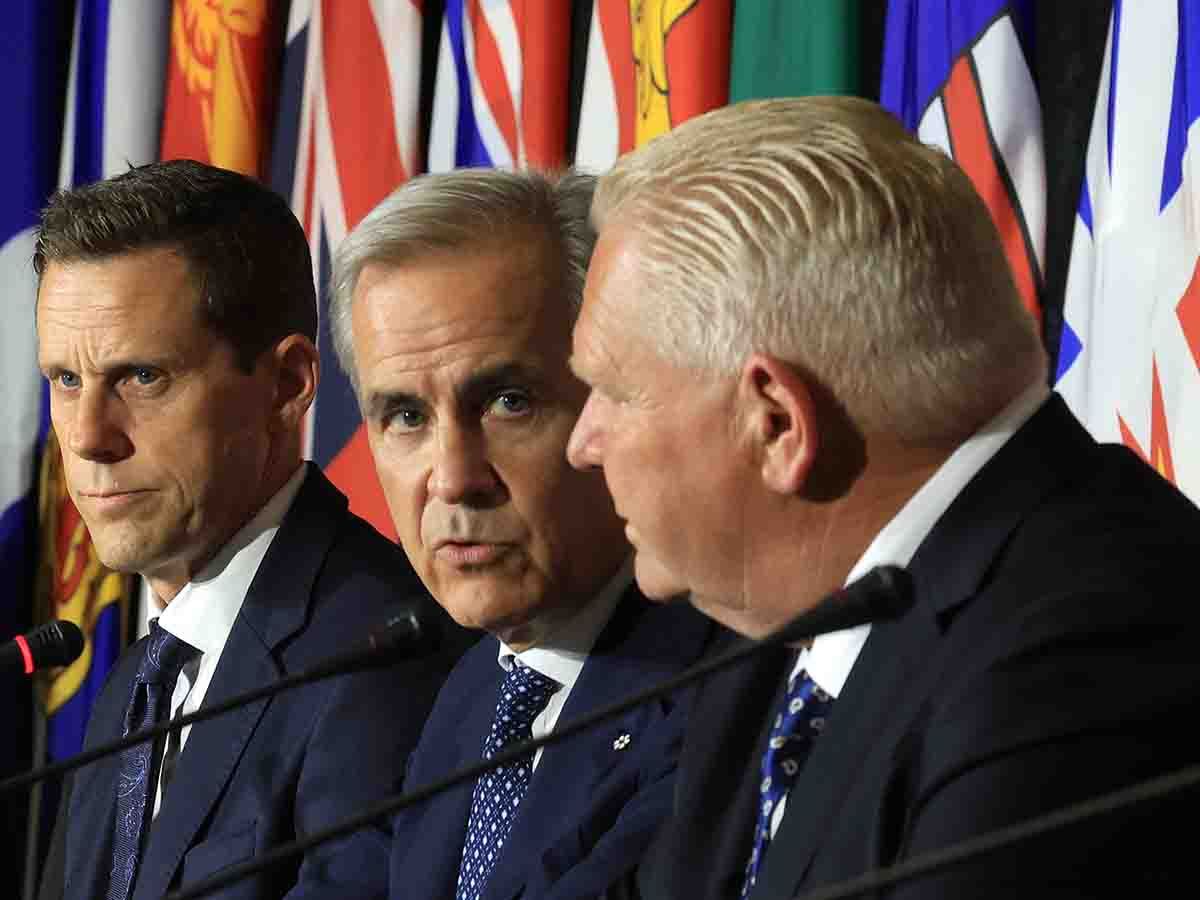
Prime Minister Mark Carney said Canada is weighing all options for possible retaliation if it doesn’t reach a deal with the United States to avert 50 per cent tariffs next month.
“Everything’s on the table if there’s no agreement, depending on the outcome of the negotiations,” he told reporters in Charlottetown on Thursday.
This week, U.S. President Donald Trump’s administration used a law that’s been on the books since the Great Depression to threaten 50 per cent tariffs on a variety of Canadian products, including electrical equipment, packaging, hockey gear and beer. The duties, which would affect about five per cent of Canadian goods exports to the U.S., are set to come into effect as soon as Aug. 19.
Carney said representatives of both governments are now having discussions that encompass all current tariffs and trade measures.
The prime minister removed many counter-tariffs on the U.S. last September, though some remain on steel and autos. Some Canadian provinces have also pulled U.S. liquor from government-run store shelves, one of the chief irritants cited in Trump’s tariff order earlier this week.
Asked whether Trump’s tariff threat is a meaningful opportunity to reach a deal with the U.S. or just a pressure tactic, Carney replied: “It’s both.”
“We’ve seen a series of trade negotiations that the U.S. has undertaken and normally there’s a deadline. Normally there’s an outsized tariff associated with that deadline,” he said, speaking at a news conference following a meeting with the premiers.
Carney has said he and Trump agreed to accelerate negotiations. In interactions with the administration this week, “there’s a level of engagement” that “reflects the seriousness of the trade relationship,” the prime minister said. Canada and the U.S. exchanged almost US$900 billion in trade in goods and services last year.
Still, Carney said, in order to sign a deal, “I have to be convinced, we have to be convinced, the team has to be convinced, the premiers have to be convinced that an agreement is worth the paper it’s written on.”
—With assistance from Thomas Seal and Melissa Shin.