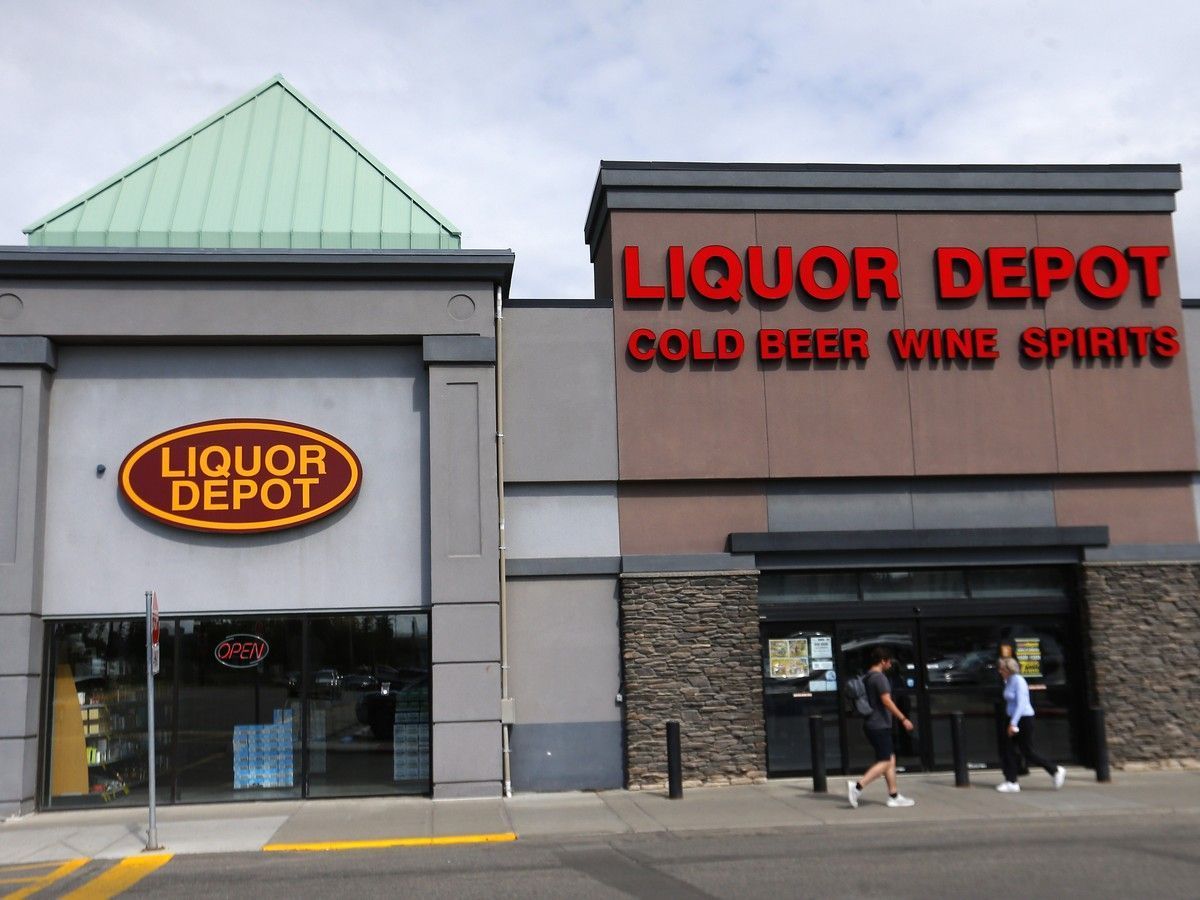
Canadians eased off booze and cannabis this spring, hitting an Alberta-based retailer with falling sales and a nearly $8-million loss.
Revenue at SNDL Inc, headquartered in Edmonton, fell by about four per cent to $235.8 million, according to second-quarter results released Tuesday.
If the name means nothing to you, the banners will. SNDL runs Wine and Beyond, Liquor Depot, Ace Liquor and the Value Buds cannabis stores, and most of them are in Alberta. It calls itself Canada’s largest private-sector liquor and cannabis retailer, which quietly leaves out government chains like the LCBO. Alberta was the first province to privatize liquor retailing in 1993.
Those stores have been an Edmonton business since the start. SNDL bought the chain in 2022 for about $320 million, back when it was a cannabis grower called Sundial Growers Inc. in Olds, Alta.
Liquor is still the biggest piece of the business, and it is going backwards. Sales fell about five per cent to $134.7 million in the second quarter.
Chief financial officer Alberto Paredero-Quiros told analysts on the earnings call this is not a sole Alberta problem.
“It’s a global phenomenon,” he said, with most markets down by low to mid-single digits. “We’re not expecting a massive turn in that performance in the foreseeable future.”
He’s not wrong. Canadians spent $25.8 billion on alcohol last year, down 1.6 per cent, and beer volumes have fallen nine years running, according to Statistics Canada.
The brewers say the reason is money.
“The main driver is Canadians are still experiencing an affordability crisis,” said Richard Alexander, president of Beer Canada, the association that represents the country’s brewers, in an interview. “Canadians have less disposable income, and when they have less disposable income, they change their purchasing behaviour.”
That shows up first in restaurants and bars, he said, where a large share of beer is sold and where sales are also falling. He put the rest on federal tax. Ottawa has raised alcohol excise duties automatically every year since 2017, under an escalator that never goes back to Parliament for a vote.
“Since 2017 we’ve seen that tax increase automatically by 18 to 20 per cent,” Alexander said.
“And at the same time, we’ve seen volumes decrease 18 to 20 per cent right across Canada.”
Ottawa has capped that annual increase at two per cent since 2023, and on April 1, three months into the quarter SNDL just reported; the government extended the cap through 2028.
Alberta is among the lightest-taxed beer markets in the country. Alexander said beer taxes here make up about 32 per cent of the average retail price, among the lowest in any province. SNDL’s liquor sales fell anyway.
The two men are describing different problems. One is a global shift in drinking. The other is a Canadian squeeze. Cannabis was not much better. Store sales slipped 1.4 per cent to $83.2 million, which the company put down to shrinking markets in Alberta and Ontario.
The worst damage came from a vape line. SNDL’s manufacturing arm lost $9.2 million in the quarter, up from $3.1 million a year earlier, after production costs on its Jeeter brand ran away from it.
Chief executive Zachary George called them “temporary production inefficiencies,” and told analysts the trouble lies in one place. “We have some acute issues that we are managing through, specifically with regards to the team in Kelowna,” he said, adding that the problems are fixable.
What SNDL does have is money. It ended the quarter with $183.2 million in cash and no debt, and it spent $23.5 million buying back 11.7 million of its own shares. George said the shares are “trading well below” their intrinsic value, and that buying them back is “still an attractive use of capital.”
Its other plan is south of the border. SNDL is about to own a chunk of the U.S. cannabis market almost by accident. A company called Parallel, formally Surterra Holdings, Inc. and its affiliates, owed money to a partnership SNDL has a stake in. It defaulted.
On Monday, SNDL closed the deal that hands it the keys to 56 retail locations across Florida, Texas and Massachusetts, pending regulators and the Nasdaq exchange. Cannabis is still illegal federally in the United States, and nothing lands on SNDL’s books until the deal closes.
SNDL shares fell by nearly 10 per cent to US$1.22 on Tuesday.
SNDL’s management says its own second half of 2026 will be better. The growth it is counting on is in Florida, Texas and Massachusetts — and it has not landed yet.
gfoster@postmedia.com