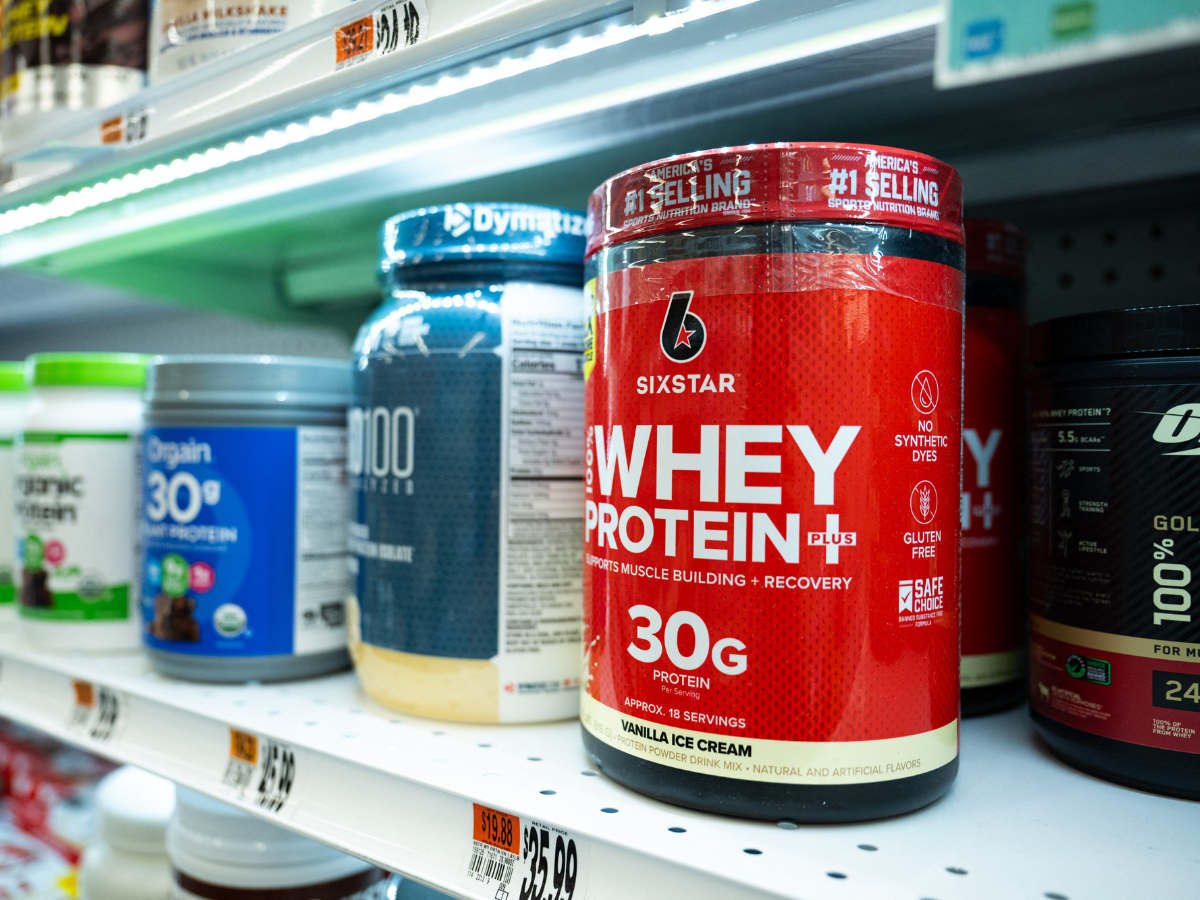
Canadian manufacturers of protein shakes, bars and other high-protein foods are scrambling to find new sources of a key ingredient after Canada’s latest retaliatory tariffs slapped a 50 per cent levy on whey protein from the United States.
The tariffs took effect Sept. 8 as part of Canada’s response to 50 per cent U.S. duties imposed on $27.6 billion of Canadian goods in August and cover U.S. whey protein concentrate as well as several other categories of whey and modified whey.
Dan Crosby, chief executive of Windsor, Ont.-based Coachwood Group Inc., which owns Canadian Protein and BioSteel, said the two companies spend roughly US$2 million to US$3 million a month on whey protein concentrate and isolate, with about 90 per cent of their supply coming from the U.S .
He said a typical truckload of whey contains about 40,000 pounds and can be worth roughly US$500,000, so a 50 per cent tariff quickly becomes impossible to absorb.
“Say, for example, on $1-million worth of protein, if we’re getting tariffed $500,000, can you imagine what that’s going to do to the cost of the product?” he said. “There’s not enough room in the margin for the product to absorb that.”
Crosby prepared for the tariffs by stocking up, so he has enough whey to last until around November, but he is hoping the tariffs will be dropped by then or that Ottawa will grant relief before his supply runs down .
If neither happens, he said he will have little choice but to look elsewhere.
“We are going to be absolutely scrambling,” he said. “It’s not going to make sense to buy from the States. We’re going to have to source elsewhere.”
Canada imports roughly 1,000 tonnes of high-protein whey a month, about 90 per cent of it from the U.S., according to data compiled by Vesper BV, a dairy market intelligence firm based in Amsterdam.
Jasper Endlich, a senior dairy market analyst at Vesper, said Canadian production of whey protein concentrate containing 80 per cent protein, known as WPC80, and whey protein isolate is “next to none” compared with the U.S.
That leaves Canadian manufacturers unusually dependent on imports for ingredients increasingly used in protein powders, bars, ready-to-drink shakes and other foods.
“If (90 per cent) is actually going to be at a much higher price, it’s going to hurt them for sure,” Endlich said.
A Canadian dairy-industry executive who sources U.S. whey for Canadian customers, and who asked not to be named because of his commercial relationships on both sides of the border, said the tariffs have companies rushing to find alternatives.
“The 50 per cent tariff creates a huge problem for Canadian manufacturers because we don’t make that product,” he said.
Crosby’s experience illustrates that dependence. Whey protein isolate containing 90 per cent protein is currently his companies’ highest-volume whey product, followed by WPC80. He said Canadian supply is available in some categories, but there isn’t nearly enough to meet his needs.
“The problem with the Canadian sources is, No. 1, there’s just not enough,” he said. “We always run into capacity issues with Canadian-sourced whey. There’s very little availability.”
The tariffs are also hitting an ingredient whose price has already soared. The average U.S. price of WPC80 rose roughly 400 per cent to more than US$28,160 a tonne in August 2026 from about US$5,620 a tonne in August 2023, according to Vesper .
Crosby remembers buying WPC80 for between US$1 and US$2 a pound before and around the pandemic, but some high-protein whey products are now costing his companies roughly US$11.50 to US$12 a pound.
“You’ve got to think, ‘What’s that do to the consumer?’” he said. “It absolutely drives the price up.”
As a result, Canadian manufacturers are trying to find their whey elsewhere, such as from Europe, New Zealand and other markets.
European WPC80 averaged about US$31,290 a tonne in August, only about 11 per cent more than U.S. product before the Canadian tariff was added in, according to Vesper, making European supplies considerably cheaper now for Canadian buyers.
“There are businesses in Canada that haven’t locked in their contracts for Q4. Even if they did, there’s too much unpredictability and uncertainty of what’s going to happen with the tariffs,” the dairy executive said. “If they run out of stock, they’re going to shut down production. That’s more expensive than anything.”
But finding whey somewhere else and actually putting it into a Canadian product are two different things.
Endlich said manufacturers may have to approve new suppliers and make new production arrangements before whey can be shipped across the Atlantic.
“Those are all things that aren’t solved in a week’s time,” he said.
Whey is produced as part of the cheese-making process, and Crosby said it can vary in taste and other characteristics from one manufacturing plant to another. Manufacturers switching suppliers have to test the new whey and may need to adjust the flavouring or other aspects of products consumers have been buying for years.
As a result, Crosby said they can’t simply switch suppliers overnight.
Manufacturers also cannot necessarily ask an overseas plant to reproduce exactly what a U.S. supplier had been making, he said.
Endlich said manufacturers of bars, yogurts and other foods in which whey is one of several ingredients may be able to switch to milk protein concentrate or other dairy proteins , but pure whey powder makers have fewer options.
“If you have one of those bags of sports nutrition with the highest concentrated whey in there, you can’t swap that out,” he said.
Some products could be reformulated while others could rise in price, although Endlich said it is too early to estimate the potential increase. Even alternatives are becoming more expensive: milk protein concentrate prices have roughly doubled over the past six months, he said.
“Whey used to be a waste product 20 years ago,” he said. “Well, now, the tables have turned.”
Plants also use different processes and may not be configured to produce precisely the same ingredient, with Crosby likening it to “going to Toyota and saying, ‘Go make a Silverado.’”
The timing of the tariffs, however, could have been much worse, Endlich said, since sufficient replacement supply was not available from Europe and New Zealand six months ago. Now, European WPC80 has recently become more available as the global market has shifted.
“The short answer is yes, they probably will,” Endlich said about whether Canadian manufacturers would have difficulty replacing U.S. whey. “It’s going to come at a high price.”
The broader market has also begun to ease after being exceptionally tight earlier this year.
Joshua White, vice-president of dairy ingredients at T.C. Jacoby & Co., a full-service dairy marketer in St. Louis, Mo., said demand had outpaced a significant expansion in U.S. production.
“We’ve just seen demand outpace a very, very good supply response,” he said.
U.S. spot-market whey prices have fallen roughly 15 per cent to 20 per cent over about 45 days and products have become easier to find, White said.
Whey has become one of the most sought-after dairy ingredients, leaving manufacturers vulnerable when trade or supply is disrupted.
“If anything happens, including tariffs, it just creates a problem real, real fast,” Endlich said.
The whey trade will also soon be squeezed in the other direction as well. Beginning Sept. 29, the U.S. will prohibit imports of specified Canadian whey products, including whey protein concentrates, modified whey, fluid whey and dried whey. Those products are currently subject to a 50 per cent U.S. tariff.
The International Dairy Foods Association, which represents U.S. dairy manufacturers and marketers, has come out against the ban and urged Washington and Ottawa to resume trade negotiations.
The association said the U.S. imported more than US$35-million worth of whey products from Canada last year. It said U.S. concerns about Canadian protein-pricing policies remain unresolved, but blocking imports will not solve the underlying dispute.
The U.S. ban offers little relief for Canadian manufacturers, whose dependence is on high-protein whey from the much larger U.S. industry. Endlich said the relatively small volume moving from Canada into the U.S. means the ban is unlikely to materially affect Canadian supplies.
Canadian manufacturers may ultimately get more immediate help from Ottawa. During the 2025 Canada-U.S. trade dispute , the federal government established a tariff-remission process that allowed Canadian businesses to seek relief from counter-tariffs when goods could not reasonably be sourced domestically or from other countries.
Crosby used the process during the previous dispute. He said his companies initially had to pay about $300,000 in tariffs on one shipment while waiting for the relief process to catch up.
“It added a little bit of costs to how we operate, but it’s much better than trying to absorb a tariff,” he said.
• Email: arankin@postmedia.com