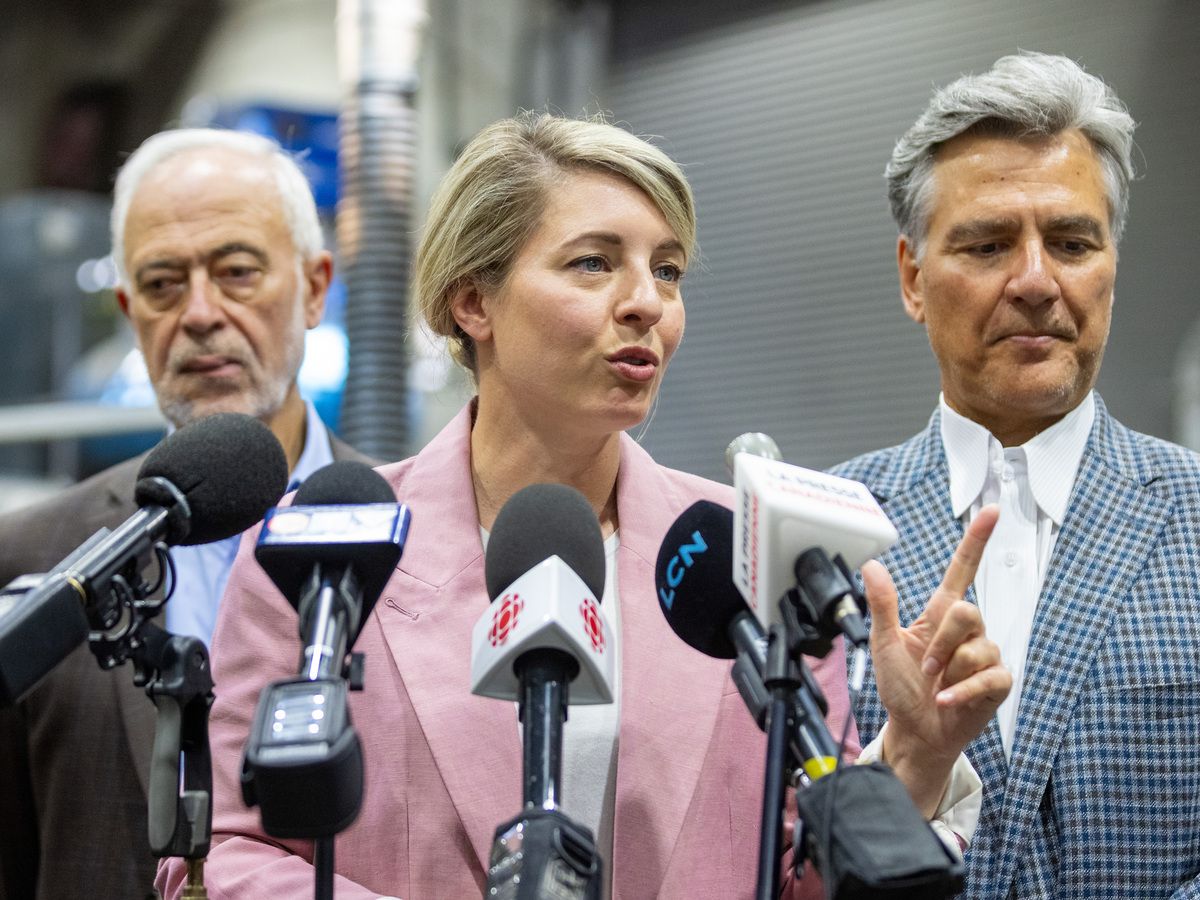
Canadian Industry Minister Melanie Joly said there’s bipartisan political support for tariffs in the United States, raising the possibility the country’s manufacturers will face barriers to North America’s largest market long after Donald Trump’s presidency .
Joly is among a number of Canadian officials who have travelled to the U.S. over the past year and a half to encourage American opposition to Trump’s trade policies . Last week, she met with Illinois Governor JB Pritzker, and in June she held a meeting with Pennsylvania Governor Josh Shapiro.
“I think that there are three things in the U.S. that are at this point very bipartisan,” said Joly, who is responsible for the Canadian aluminum, steel and automotive sectors — all of which have been affected by Trump’s so-called Section 232 tariffs. “The first one is tariffs. The question is on which sector and will they apply to Canada ?” Many Republicans and Democrats also seem to agree on reducing U.S. engagement on the world stage and on immigration reform, she added.
Joly said she has made the argument to U.S. lawmakers that tariffs on Canadian products merely drive up expenses for Americans by introducing new costs in the supply chain. “They are actually hurting themselves because it has an impact on cost of living, because of the close integration of our economies,” she said in an interview.
Many high-profile Democrats have criticized Trump’s indiscriminate approach to tariffs on trading partners, as well as his administration’s hostility toward Canada. But that’s not to say they would reverse the tariffs if they were in power in Washington.
California Governor Gavin Newsom, a potential 2028 Democratic presidential candidate, said in an interview with CTV News last month that he can’t guarantee Democrats would lift the tariffs, but said their approach to trade would be “nothing like” Trump’s.
Democratic Senators Elissa Slotkin, Gary Peters and Tammy Baldwin in 2025 called for a review and revision of U.S. trade agreements, including the North American trade pact, to ensure the best outcomes for American workers.
With the midterm elections approaching, U.S. policymakers in both parties have called on Trump to back off on his trade war with Canada, and focus his tariff policy on countering China’s rising power in sectors such as automotive.
“We need to be smart and strategic about trade policy, not trigger-happy. Renaming Lake Ontario won’t make a car cheaper to build or help a family pay its rent,” Michigan Governor Gretchen Whitmer, a Democrat, wrote in recent Wall Street Journal op-ed that rebuked Trump’s tariffs.
Susan Collins, a Republican senator who’s fighting for reelection in Maine, has also said she wants a deescalation of the Canada-U.S. trade fight.
One major factor in whether tariffs will stay: the U.S. government needs revenue . The federal deficit is around six per cent of gross domestic product. So far this year, the U.S. has brought in US$212 billion of revenue from gross tariffs and certain other excise taxes, according to the Washington-based Bipartisan Policy Center — up from US$65 billion in the same period in 2024.
Some Canadian stakeholders have argued for the government to target U.S. swing states with retaliatory tariffs, to put political pressure on Republicans. But Brian Clow, a former senior Canadian adviser on trade and U.S. relations, said the midterms shouldn’t be a major factor for Canada’s approach to negotiating tariff relief with the U.S.
“Nobody should expect the Democrats to save Canada or come to our rescue when it comes to Donald Trump’s tariffs,” Clow said. “Although there are some voices speaking out against Donald Trump’s tariff policy, many of them aren’t speaking out against it and may actually support it.”