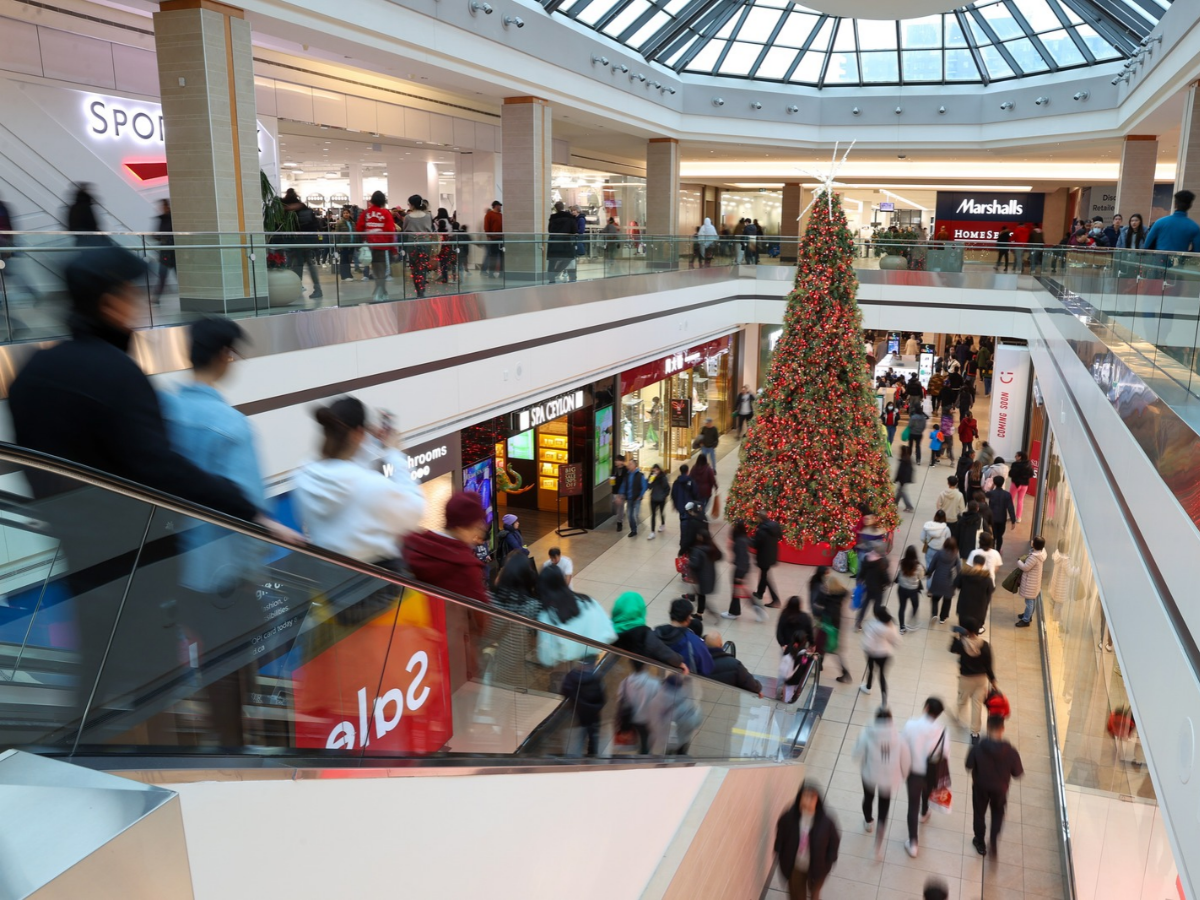
Spending on gifts and gift cards is expected to drop five per cent this year as Canadians get increasingly intentional with their purchases amid rising costs, according to Deloitte Canada’s 2026 holiday retail outlook .
Deloitte said spending on holiday entertaining and experiences is also expected to have a sharp decline, driving much of the drop to the lowest overall holiday spending level since its survey began.
Spending on holiday entertaining, such as alcohol, cannabis and groceries, is expected to decline 22 per cent, while spending on experiences such as travel, vacation and dining out is expected to go down 20 per cent.
Overall, holiday spending is expected to drop 14 per cent this year to $1,305, compared to $1,521 in 2025. Gifts, groceries and travel remain the largest planned categories.
“Canadians are not cancelling the holiday season, but economic uncertainty is influencing their spending decisions, making them far more discerning ,” said Deloitte Canada national retail leader Shaunna Conway.
Conway said this shift is creating more price-conscious consumers . Retailers that offer clear, compelling value propositions will be best positioned to earn a place in shoppers’ holiday baskets this year, she said.
The report said Canadians’ economic concerns remain high entering this shopping season. It said 83 per cent of respondents express concern about the impact of tariffs on prices and the broader economy.
One in three Canadians say their household finances are worse than a year ago, while 45 per cent expect the economy to weaken by 2027.
As for the trade war, nearly half or 45 per cent of consumers consider Canadian or local ownership important when choosing where to shop, but 35 per cent would choose value and are unwilling to pay a premium for products based solely on local ownership.
Black Friday is still set to be busy this holiday season with than half of budgets expected to be spent by the end of the Black Friday and Cyber Monday period.
Value will be a primary driver of spending decisions this year, as a result. It said 78 per cent are actively looking for more discounts, promotions and sales to protect their budgets.
The survey said 29 per cent of Canadians intend to spend less this year as they become increasingly focused on maximizing value.
Shopping journeys are becoming more fragmented, with consumers expecting to visit an average of 16 stores and digital destinations when looking for gifts, up from 14 last year. Consumers aged 35 to 44 plan to shop at an average of 23 retailers this holiday season.
While 55 per cent of planned holiday spending is expected to take place in-store, 42 per cent is expected to be done online, with Amazon.com Inc. at 65 per cent and Alphabet Inc. at 64 per cent still the leading sources for holiday shopping research.
The role of artificial intelligence in retail is also growing. Nearly 40 per cent of consumers plan to use AI for holiday shopping, primarily for gift inspiration, price comparison and deal discovery, compared with 25 per cent in 2025.
While generative AI is emerging as a new discovery tool, only 19 per cent of shoppers would be comfortable allowing AI to make purchases on their behalf.
Meanwhile, 46 per cent of consumers are willing to provide personal information or share their data for promotions, while 68 per cent worry about data misuse or unclear data practices.
The Deloitte Canada surveyed Canadian consumers across age groups, financial situations and regions between Aug. 28 and Sept. 4.
• Email: dpaglinawan@postmedia.com