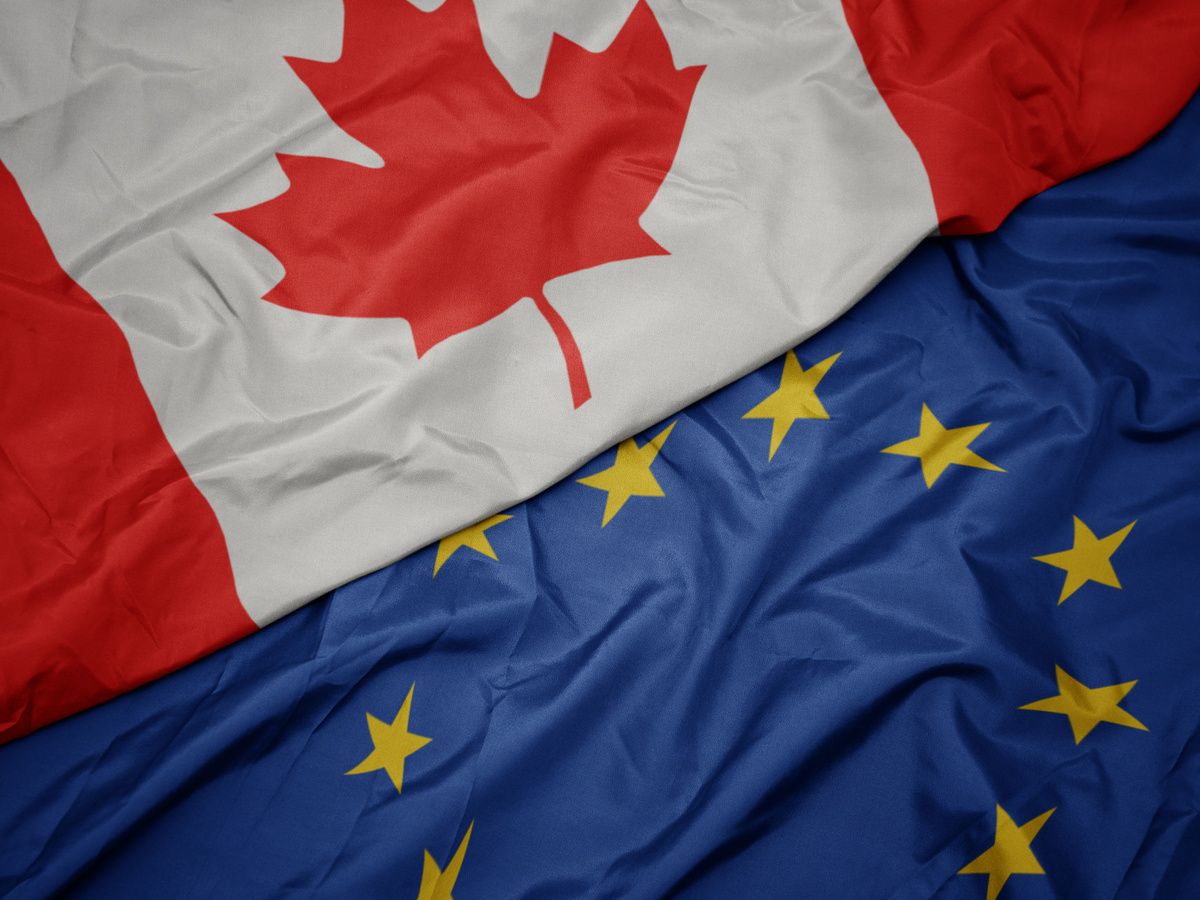
The European Union and Canada will endorse an unprecedented alliance at a summit next week, cementing plans for associate EU membership for Ottawa as both reduce their dependence on the United States.
The two sides will commit to building “a deeper, more integrated and strategically aligned relationship,” according to a draft communique to be agreed at the gathering on Oct. 29 and 30. “The full scope of this associate membership will be defined by the 2027 Canada-EU Summit,” the text states.
Canadian Prime Minister Mark Carney will host European Council President Antonio Costa, who represents the EU’s 27 countries, and Ursula von der Leyen, the head of the European Commission, the EU’s executive arm, in Montreal for the summit.
It follows a visit by Carney to the European Parliament in Strasbourg last month where von der Leyen proposed making Canada the EU’s first “associate member.” She also touted the idea of an “Alliance for the Future” that would span economic security, critical minerals, technology, energy and defence. The two sides are expected to use the Montreal meeting to start defining how that deeper relationship would work.
A spokesperson for Costa, who has responsibility for EU summits, declined to comment on the draft communique.
The push for greater integration reflects efforts on both sides of the Atlantic to reduce exposure to increasingly unreliable trading partners and secure critical supply chains.
The latest draft of the communique — which could still change before adoption — opens the door to greater EU-Canada alignment on economic security measures. The two sides will ensure “mutually favourable treatment” when it comes to their respective economic security policies if each align their strategies, according to the document — a barely-veiled reference to China.
The EU last week agreed plans to cap the number of Chinese electric vehicles entering the bloc to 350,000 annually and backed plans to create new trade powers that could completely shut off Beijing’s access to its single market.
Canada shifted its own policy on Chinese car imports earlier this year, agreeing to allow imports of up to 49,000 Chinese EVs in a 12-month period at a tariff rate of around six per cent. Prior to that, Canada had aligned with the U.S. in setting tariffs of more than 100 per cent on those products, effectively shutting them out.
Trade between the two partners is already governed by CETA , a wide-ranging trade deal sealed a decade ago that eliminated duties on almost all goods and gave the EU greater access to Canada’s services markets. Although it has provisionally entered into force, 10 EU countries have yet to ratify it.
The EU and Canada now want to explore further cooperation on energy, critical minerals, artificial intelligence and computing infrastructure, and financial services, according to the draft.