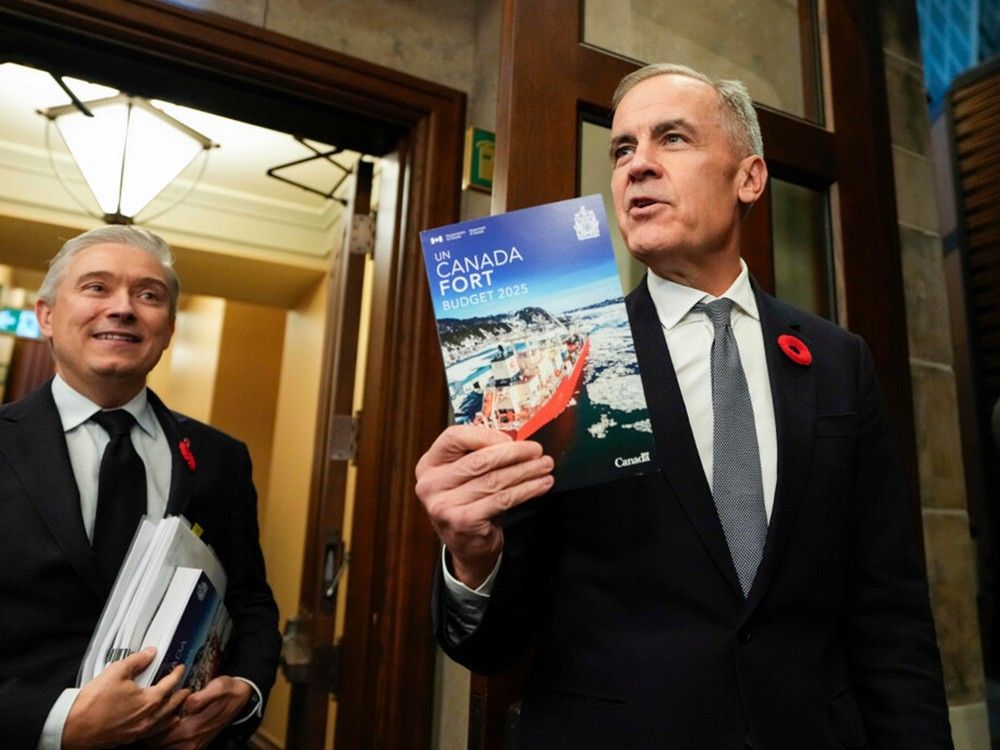
The government of Prime Minister Mark Carney released
, and with it came ample confusion around the impact it would have on the federal public service.
The budget revealed some important numbers public servants need to know, including the number of jobs which will be shed from the public service, but it was light on detail when it came to what departments and agencies will bear the brunt of these cuts.
Here’s a breakdown of what we do know at this point to answering lingering questions.
How many public servants will lose their jobs?
The budget said that the federal public service will see “a decline of about 40,000” jobs by the end of the 2028-29 fiscal year. For some reason, in that number, the government decided to include jobs that have been shed since the size of the public service peaked in 2023-24.
In that year, the public service grew to 367,772,
according to Treasury Board data
. Former prime minister Justin Trudeau’s government then oversaw a reduction of around 10,000 jobs, bringing the number of public servants down to 357,965 in the following year.
The numbers mean that around 30,000 jobs are still set to be lost over the next three fiscal years, ending in 2028-29. By that point, the public service is expected to be brought down to 330,000.
Some confusion arose after the release of overall headcount numbers, as they were accompanied by what are called
full-time equivalents, or FTEs
. This is a unit of measure that defines the work of a full-time employee. So two or three part-time workers might do the work of one FTE.
The Treasury Board collects and releases data on the overall headcount in the public service, while departments will plan for the amount of full-time equivalents are needed over the coming year. So while the headcount of the public service will likely be reduced by around 30,000 over three years, it will only see a decline of 16,000 FTEs during that time period.
When will these cuts happen?
Technically, the cuts have already begun, but they were those of the previous government.
The next wave of cuts will likely begin soon, depending on if and when the budget passes.
The government has said it expects most of the reductions to happen through attrition. Past that, if there are permanent employees that will be laid off, they’ll enter what’s called
the workforce adjustment process
. This offers employees affected by potential layoffs opportunities to compete for positions, look for other opportunities or swap with a public servant willing to take a buyout in their place.
The process can take one to two years to play out before departures happen in earnest.
In the budget, the government announced $1.5 billion will go to early retirement incentives.
How many executives could lose their jobs?
The federal budget also unveiled that 650 executive full-time equivalents will be cut, which the government said will be roughly 1,000 jobs.
Those cuts will amount to a reduction of roughly 7 per cent of the “executive population” and will occur by the end of the 2027-28 fiscal year.
Which departments and agencies will lose the most public servants?
It remains unclear how many positions will be lost in each department and agency, as the budget offered no breakdown of where the job cuts will happen.
The federal government has committed to find up to 15 per cent of savings over three years, finishing at the 2028-29 fiscal year, across most departments and agencies.
The only exceptions are the Department of National Defence (DND), the Canada Border and Services Agency, the RCMP, Women and Gender Equality, Indigenous Services Canada and Crown-Indigenous Relations and Northern Affairs Canada, which all have been given a two per cent savings target over the same time period.
When will we know more?
Observers say that more details will likely be seen when what are called the main estimates are tabled in Parliament. These estimates should provide a more detailed breakdown of where government funding is going.
The Department of Finance has told the Ottawa Citizen that more details on the spending review will be released in “due time.”