The
grew at an annualized rate of 2.6 per cent in the third quarter, blowing well past the expectations of the
and economists.
Forecasters had predicted
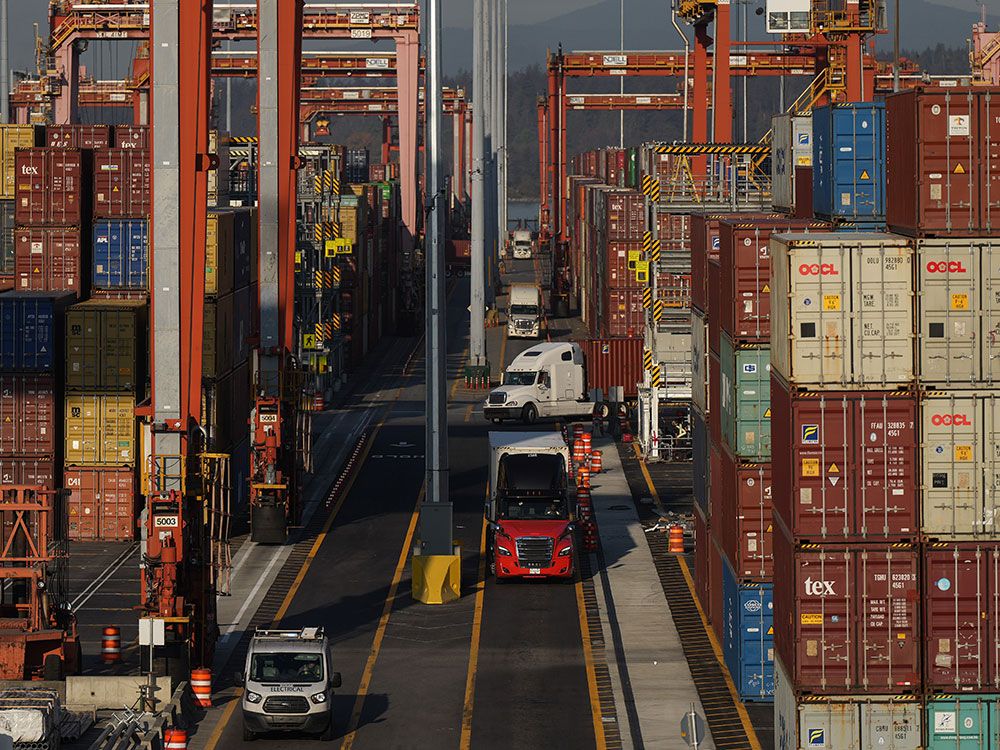
would expand by a much more modest 0.5 per cent. The momentum was driven by Canada’s strengthening trade balance, with a decrease in imports and an increase in exports during the quarter,
Statistics Canada said on Friday.
It was also helped by increased capital spending by governments, with business investment remaining flat.
After a contraction in the second quarter, Friday’s data means the Canadian economy has successfully avoided a recession, which is defined as two back-to-back quarters of negative GDP growth.
However, an advanced estimate for October shows that momentum may have faded going into the final quarter of the year, with activity contracting by 0.3 per cent during the month.
Imports of goods and services decreased by 2.2 per cent during the quarter, while exports rose by 0.2 per cent, after posting a significant decline of seven per cent in the second quarter.
Apart from the improved trade balance, government capital expenditures rose by 2.9 per cent, driven by a significant increase in spending on weapons systems. Residential investment also rose in the third quarter, thanks to an increase in resale activity. The construction sector continued to struggle, however, with new construction declining by 0.8 per cent.
Quarterly growth was also led by higher export prices for energy projects and a rebound in corporate income, which increased by 2.5 per cent, due to higher income from energy, mining and manufacturing products.
Household spending declined during the quarter by 0.1 per cent, driven by decreased spending on passenger vehicles, but offset by increased spending on rent and financial investment services. The household savings rate rose, as disposable income slightly outpaced nominal household spending.
There was also a decline in inventories in the manufacturing, transportation, communication and utilities sectors.
Monthly GDP expanded by 0.2 per cent in September, offsetting the decline in August. The manufacturing sector led the growth, followed by transportation and warehousing, wholesale trade and mining and quarrying.
Statistics Canada on Friday also revised down its second-quarter GDP figures, noting the economy contacted by 1.8 per cent from the previously reported 1.6 per cent.
• Email: jgowling@postmedia.com