It might be wet and slushy across Nova Scotia at the moment, but it’s never too early to brace for wildfire season.
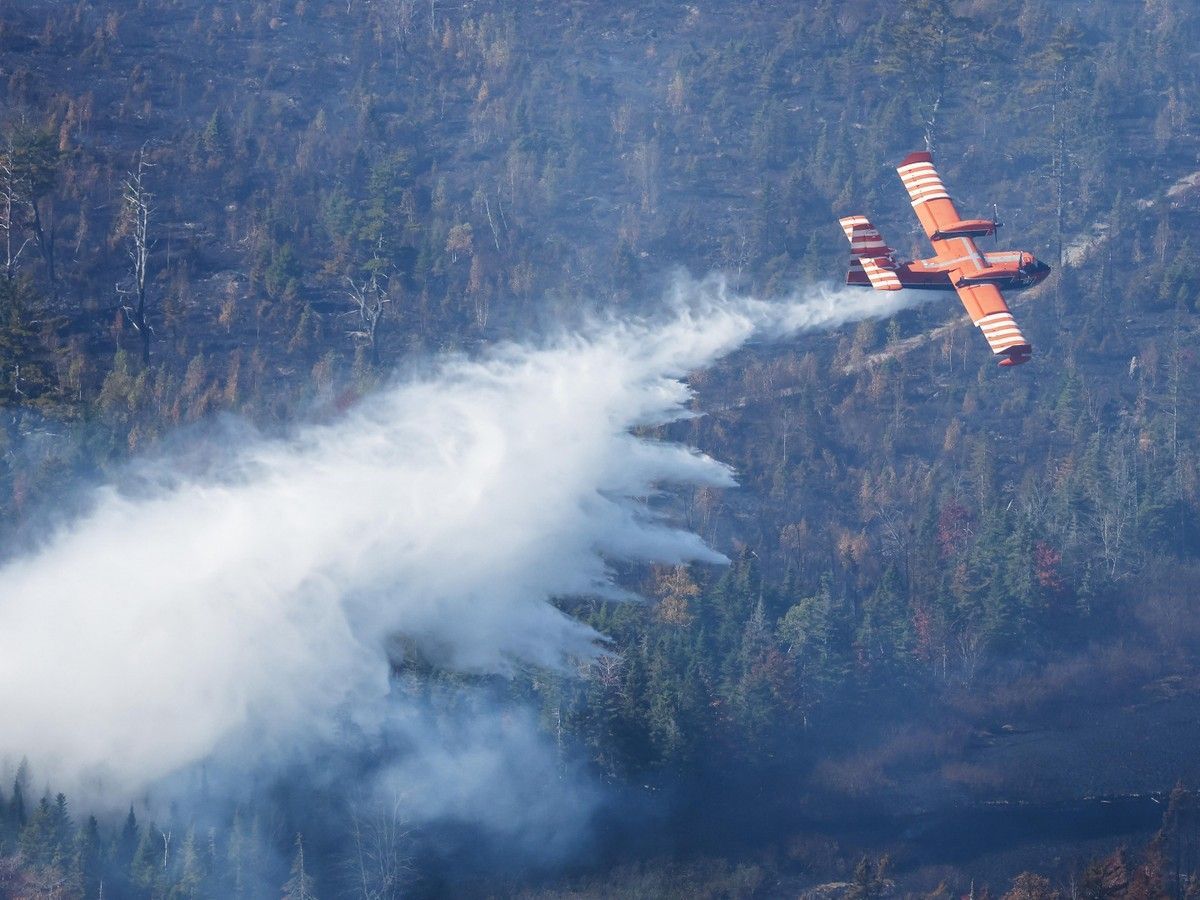
Provincewide seasonal burning restrictions go into effect on Sunday, and the provincial government just announced a $6.8-million commitment to contract four fixed-wing water bombers.
“It’s a one-year contract and they’ll be stationed in the province,” Jim Rudderham, the director of Nova Scotia fleet and forest protection, said. “They will be our resources exclusively and we’ll have them from May 1st to September 30th.”
“We’re contracting them because you can’t just go out and buy them off the shelf,” he added. “You have to get on the waiting list to get them, then they have to be built and delivered, so you’re looking at three to five years for one of these planes. You can’t just go out and get one tomorrow, so by contracting them, we can have them tomorrow.”
In previous years, Nova Scotia had to rely on loaned planes from other parts of Canada. During last year’s wildfire near Lake George in the Annapolis Valley, for example, firefighting aircrafts had to be flown in from New Brunswick, Quebec, Manitoba, Alberta, and Newfoundland and Labrador.

The new fleet will be Air Tractor AT-802 planes, which can scoop up roughly 3,000 litres of water at a time. They have a reputation as being well-suited for rapid response.
“Time is always of the essence,” Rudderham said. “Normally our crews are there very quickly, and we have our helicopters, as well. This is just extra insurance and another tool in our toolbox to help us attack these fires as quick as we can.”
Rudderham said his department also just replaced its four-helicopter fleet with new ones, so the province is in a better position than ever to react and control outbreaks.

“The difference between helicopters and fixed-wings is that the fixed-wings, they can do one thing,” Rudderham said. “They fly in and they drop their load on the fire and they go home. They go back and forth. The helicopters are super versatile. These fixed-wing planes don’t fly in the winter. They fly during the fire season only.
“Our helicopters fly year round and they do a multitude of tasks, including fighting fires, carrying crews in and dropping them off, search and rescue work, and work with law enforcement agencies. They can do so much other work the planes are not equipped to do, so this complements our helicopters.”

At the civic level, domestic outdoor fires will not be permitted in Nova Scotia between 8 a.m. and 2 p.m., starting on Sunday. This includes campfires, brush burning, burn barrels, chimineas and fire pits. Those restrictions will stay in effect until Oct. 15, but that daily time frame is subject to change, based on risk levels.
The five designations used by the province are low, moderate, high, very high and extreme. When risk increases into the middle ranges, the standard first step is to restrict burning from 7 p.m. to midnight. When risk escalates past that level, fires are banned altogether.
This has become much more common in recent years, and even expanded to include a comprehensive woods ban for a long stretch last summer. People were not allowed in Nova Scotia’s forests for 24 days last August, but the restriction lasted much longer in certain regions like the Annapolis Valley, where it extended a total of 10 weeks.
“We prepare ourselves as much as we can for fires that happen, but if people can prevent these fires from happening in the first place, that’s the best way to fight them,” Rudderham said. “Most of our fires are started by people, so it’s everyone’s responsibility.”