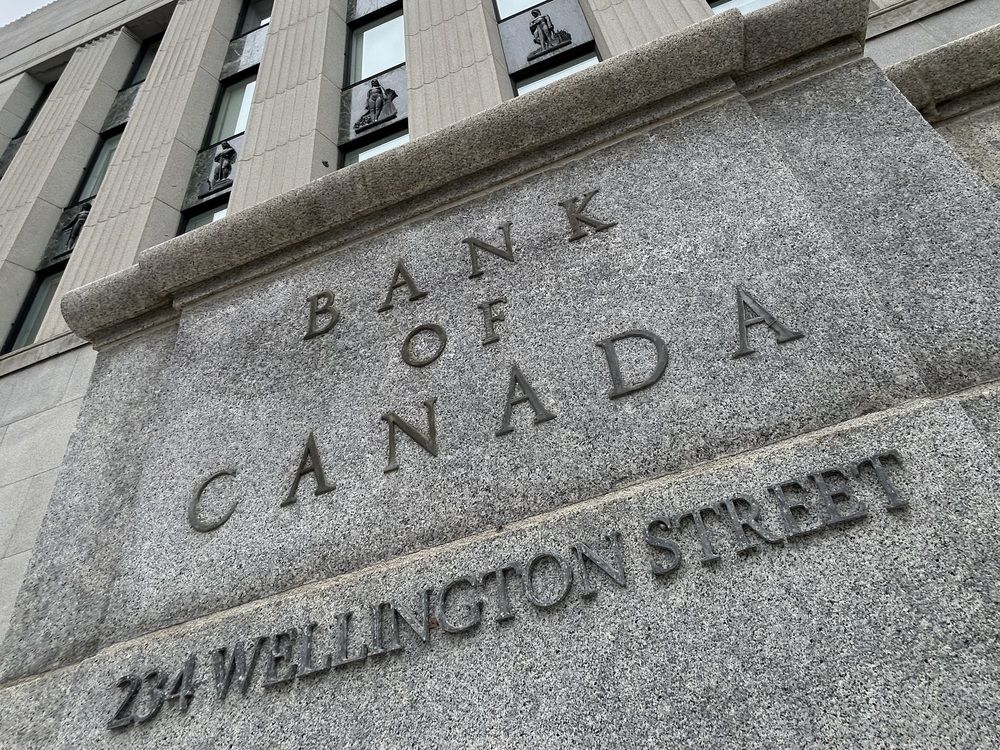

The
will increase
to 2.5 per cent when it does decide to make a move, but that won’t be until next year, according to a new C.D. Howe Institute report.
The think tank said the central bank should keep rates on hold at 2.25 per cent when it meets next Wednesday, but raise them by 25 basis points in March 2027.
C.D. Howe’s monetary policy council, which it described as a shadow Bank of Canada governing council, said it made the call based on uncertainty over the war in
and how it will affect
and the
.
“As monetary policy works with a lag, the question is not where oil prices are today, but where they will be later in the year,” C.D. Howe said in a press release. “On that front, there is significant uncertainty.”
The council said higher oil prices can benefit Canada’s economy, but they will hurt global growth overall, though other data points indicate it’s hurting this country, too.
Prices of products manufactured in Canada — the Industrial Product Price Index (
) — rose 2.4 per cent month over month in March and 7.8 per cent year over year, Statistics Canada said on Thursday. Prices for raw materials jumped 12 per cent month over month and 23.6 per cent year over year, based on the Raw Materials Price Index (
). Both indexes came in above analysts’ expectations.
The agency attributed the rise in both measures to the United States-Israel war on Iran and the subsequent closure of the
, as prices for energy and petroleum products that factor in the IPPI rose a record 27.4 per cent.
Prices also rose up in non-energy areas, including the cost of ammonia, fertilizers and aluminum as supplies from the Middle East were disrupted. Canola prices rose as well since they are a component in the biofuel market. Statistics Canada attributed wheat and grain price increases to the rising cost of fertilizer.
Derek Holt, vice-president and head of capital markets economics at the Bank of Nova Scotia, said he is more worried about the numbers for the two measures of inflation that strip out energy and petroleum.
“They have been soaring for a while and this matters because this measure tends to lead core consumer price inflation,” he said in a note on Thursday.
Scotiabank is currently calling for interest to hit three per cent by the end of 2026.
The Bank of Canada’s mandate is to hold inflation at its two per cent target. It uses hikes to control accelerating inflation and cuts to deal with deflation.
Current measures of core inflation are sitting slightly above its target.
The Bank of Canada will also release a new Monetary Policy Report (MPR) on Wednesday, which will likely forecast higher growth, but also higher inflation, including a “stronger rebound in core inflation,” Bradley Saunders, North America economist at Capital Economics Ltd., said.
“The improved growth backdrop and nascent threat of higher inflation expectations mean the Bank of Canada will keep rates on hold again but likely take a more hawkish tone at its meeting next week,” he said in a note.
Sign up here to get Posthaste delivered straight to your inbox.


Read the full story here.

- Energy and Natural Resources Minister Tim Hodgson speaks at the Empire Club of Canada in Toronto at the event One Year of Nation Building: Looking Back, Moving Forward, moderated by Lisa Raitt.
- Today’s data: Canada retail sales for February, University of Michigan consumer sentiment index
- Earnings: Kuya Silver Corp., Procter & Gamble Co., Dow Chemical Co., Hasbro Inc., Western Union Co.



- In Newfoundland’s squabbling fisheries, Greenland cast by some as the invader
- Garry Marr: If you’re crazy enough to want to donate money to the CRA, here’s how to do it
- Canada’s condo supply is about to fall off a cliff

Are precious metal investments, such as gold or silver, stored in a vault outside of Canada considered foreign property, such that their mere existence must be reported annually to the tax man? A new technical interpretation released by the Canada Revenue Agency this week suggests that investors who have a beneficial interest in physical gold or other metals may have an obligation to file a special form if the cost of their metals was more than $100,000 at any time in the prior year. Keep reading Jamie Golombek
to find out more.

Interested in energy? The subscriber-only FP West: Energy Insider newsletter brings you exclusive reporting and in-depth analysis on one of the country’s most important sectors.
McLister on mortgages
Want to learn more about mortgages? Mortgage strategist Robert McLister’s
can help navigate the complex sector, from the latest trends to financing opportunities you won’t want to miss. Plus check his
for Canada’s lowest national mortgage rates, updated daily.
Financial Post on YouTube
Visit the Financial Post’s
for interviews with Canada’s leading experts in business, economics, housing, the energy sector and more.
Today’s Posthaste was written by Gigi Suhanic with additional reporting from Financial Post staff and Bloomberg.
Have a story idea, pitch, embargoed report, or a suggestion for this newsletter? Email us at
.
Bookmark our website and support our journalism: Don’t miss the business news you need to know — add financialpost.com to your bookmarks and sign up for our newsletters here