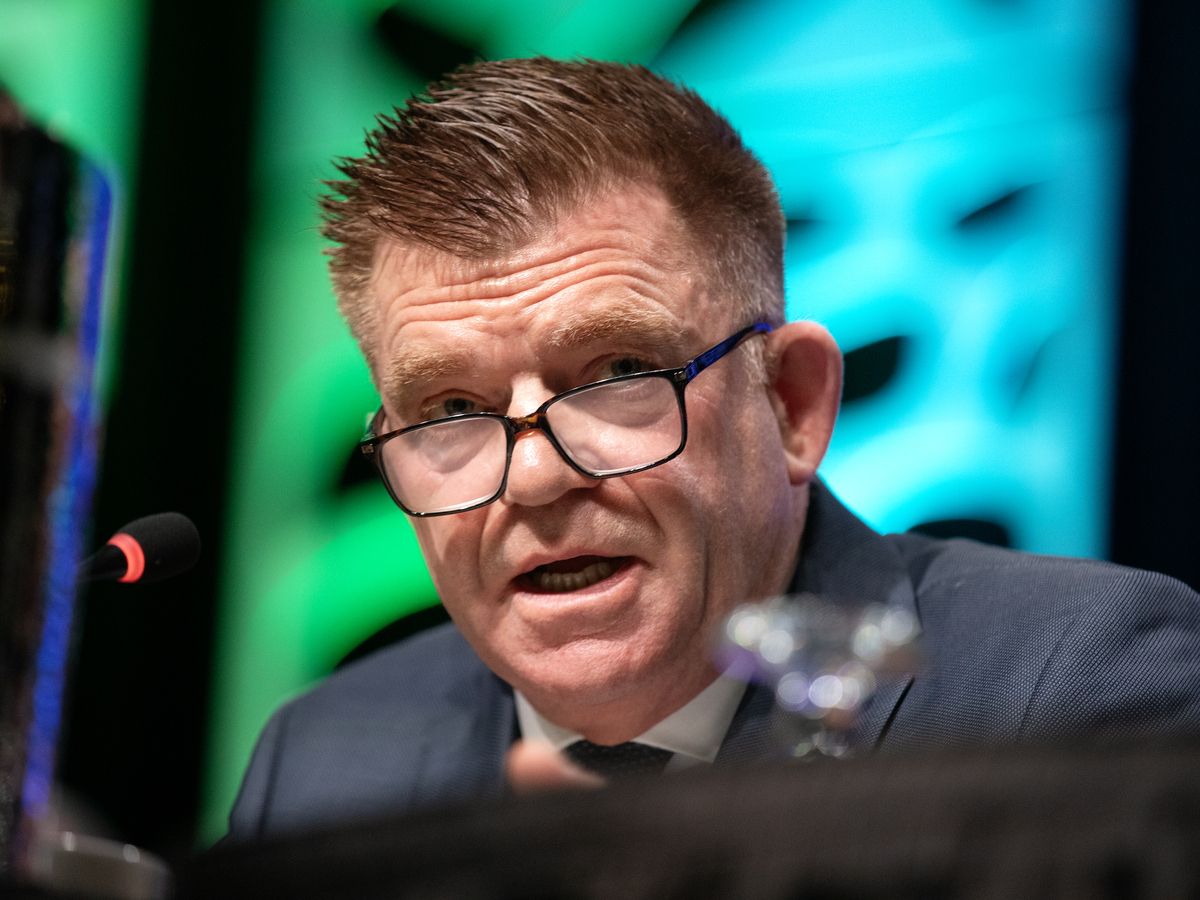
The Alberta government believes it will have Indigenous support for its plan to build a new oil pipeline to the Pacific coast when it’s unveiled in June.
“The conversations I’m having with First Nations, and have had up to this time, have been very positive,” Energy Minister Brian Jean said in an interview with Bloomberg News.
The loudest voices in opposition to the pipeline don’t necessarily speak for the communities that live along the prospective routes, he said.
Alberta, the province home to Canada’s largest oil deposits , signed an energy agreement with Prime Minister Mark Carney’s government last November that included a potential new pipeline through British Columbia to supply crude to Asian markets .
While the plan is for the private sector to eventually build and operate it, for now the Alberta government is developing the proposal itself.
Jean said his government is working hard on both Indigenous consultations and environmental plans ahead of submitting its application to the federal Major Projects Office for review. “We’re making sure that those parts of the agreement or negotiations are well underway, if not completed,” he said.
Asked directly if he expects to have Indigenous support for the pipeline application, he answered, “Yes, I do.”
Gaining the support of affected Indigenous groups is important to building major infrastructure in Canada. While it’s possible to construct projects over the objections of First Nations, governments are legally required to deeply consult with impacted communities, and the path is smoother with their support.
The federal government and provinces have also created funds to help Indigenous groups buy equity stakes in energy projects, and the agreement Alberta signed with Carney foresees Indigenous co-ownership of the proposed pipeline.
Jean said a route through northern BC “only makes sense” in comparison to trying to build one south to Vancouver. Attempting to follow the same route as the Trans Mountain pipeline, as some have advocated, is “not very feasible,” he said, in part because of how expensive it would be to build.
“We need a pipeline to go down a new route that will benefit the people along those routes,” Jean said. “The opportunities in the north are not just significant from our perspective, they’re significant for the people that live there.”
The Alberta government is examining three potential routes in northern BC, including one that would terminate in the port city of Prince Rupert and two more further north along the coast, Bloomberg reported last week.
There is already another major energy project planned for that region. Ksi Lisims LNG, a new liquefied natural gas export terminal on the coast north of Prince Rupert, has regulatory approval and the backing of the Nisga’a Nation, an Indigenous group that owns the development land. The project is still waiting for a final investment decision.
The idea of an oil pipeline running through northern BC has sparked staunch opposition from an alliance known as the Coastal First Nations, which includes groups along northern coastal waters — including the Metlakatla First Nation near Prince Rupert.
About a decade ago, several of the Coastal First Nations communities successfully challenged in court Enbridge Inc.’s Northern Gateway pipeline proposal, which would have carried Alberta crude to Kitimat, BC. The groups welcomed a move by former Prime Minister Justin Trudeau’s government to ban oil tankers off the northern BC coast. Carney has promised to consider an adjustment to the ban to support Alberta’s pipeline proposal.
There are other significant obstacles facing the construction of a new oil pipeline — including ongoing negotiations between the Alberta and federal governments over a climate emissions framework.
The energy pact signed last fall included a deadline of April 1 for the two sides to agree on an industrial carbon price that would eventually rise to an effective price of $130 per metric ton. As of this week, the two sides are still locked in talks, but Jean said he’s optimistic they’re making progress.
“I’ve felt that we were close for a month,” he said. “There are almost daily conversations now going on about the price on carbon, and how we get to what we need to do and still make sure we’re competitive.”
Jean said his priority is to strike a balance between climate policy and the ability to compete on the global energy market.
“If we’re not competitive, we will be letting the rest of the world pollute while we have the best technologies and the best people to do what we need to do to reduce it, and we can’t do that because nobody’s going to invest in it,” he said.