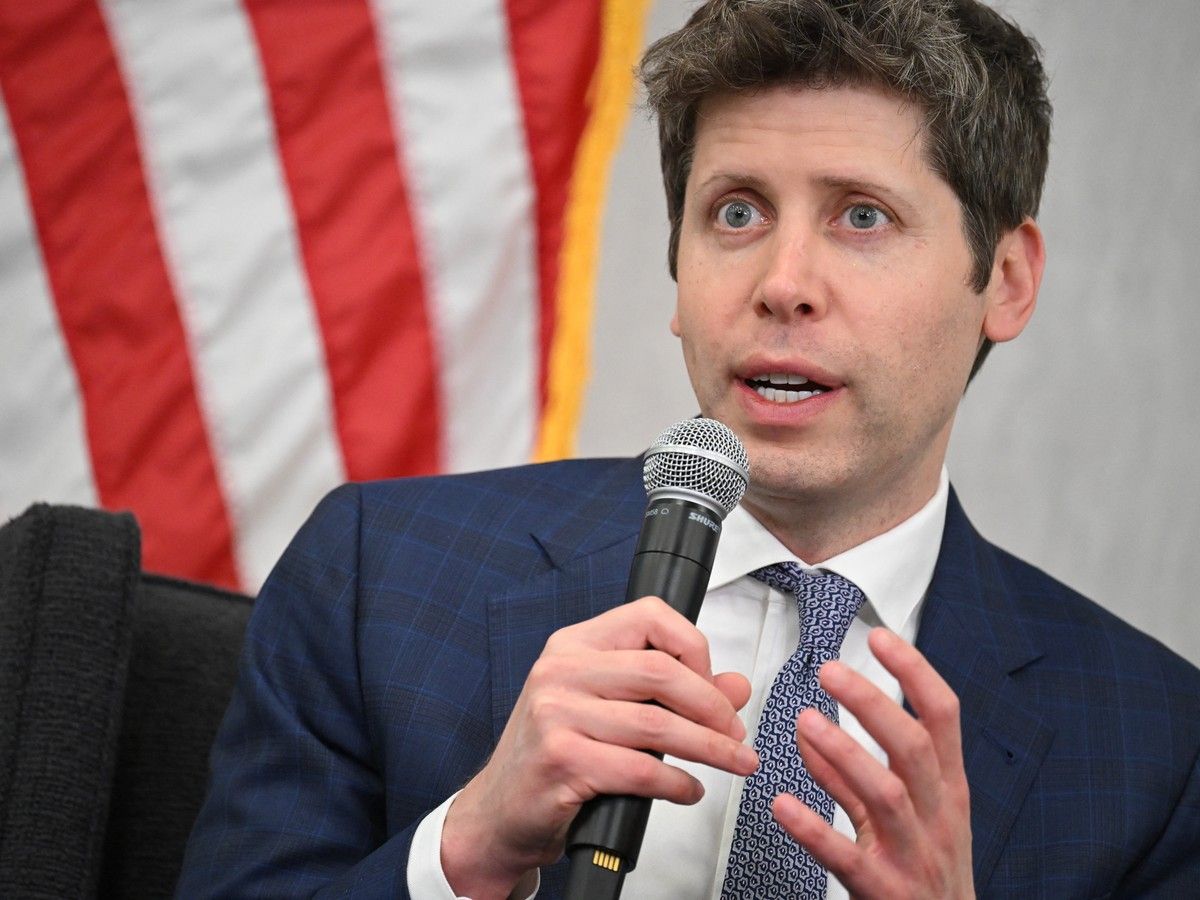
The doom-laden warnings of mass AI-driven joblessness may have been overstated, the technology’s biggest proponents are now saying.
Open AI CEO Sam Altman is “delighted to be wrong” about the impact AI would have on the economy, he said at a conference in Sydney earlier this week. “I don’t think we’re going to have the kind of jobs apocalypse that some of the companies in our space advocate or talk about,” he said in the virtual interview.
“I’m delighted to be wrong about this, I thought there would have been more impact on entry-level white-collar jobs being eliminated by now than has actually happened,” Altman told Matt Comyn, the CEO of the Commonwealth Bank of Australia, which sponsored the AI conference. “I now think I understand more about why it hasn’t, and I’m obviously grateful, but that is an area where my intuitions were just off.”
Similarly, Dario Amodei, the CEO of Anthropic, has offered a positive reassessment of his thinking on what an automated future would look like. Instead of eliminating half of white-collar jobs as he previously claimed, Amodei now says that AI would be a productivity booster.
“If you automate 90 per cent of the job, then everyone does the 10 per cent of the job,” he said earlier this month. “And the 10 per cent kind of expands to be 100 per cent of what people do and kind of 10 times their productivity.”
The change in tone also coincides with plans for OpenAI and Anthropic to go public. With both companies seeking valuations north of $1 trillion, they will need broader buy-in. Public sentiment against AI has also notably shifted, as commencement speakers who tout the technology found out in universities across the U.S. this graduation season after being met with boos, eye rolls and slow-motion head shakes from their young audiences.
AI’s reappraisal comes after the drastic reductions in headcounts that were promised have largely failed to materialize.
“There haven’t been any dire consequences for jobs over the last year, despite AI models getting to levels that their CEOs thought might actually have an impact,” said Joshua Gans, Jeffrey S. Skoll Chair of Technical Innovation and Entrepreneurship and professor at the University of Toronto.
“I think when they were making these pronouncements a year ago, they were talking about the stuff that we now have in our hands,” he told National Post in an interview.
A study earlier this year by the U.S. National Bureau of Economic Research found that those whose jobs were most exposed to AI adoption were well placed to transition their skills to find new work. The study analyzed 356 occupations and found that among the 37 million who scored highest in AI exposure, 26.5 million were able to adapt in the event of job loss.
Workers with higher pay and post-secondary education requirements, such as managers and computer specialists, were considered to be among the most exposed but better suited to transfer their skills. But, the study found that the disruption would not be even. The 6.1 million workers in high-vulnerability roles were concentrated in clerical, administrative and assistance roles and disproportionately female (81.3 per cent compared to 48 per cent in other occupations).
U.S. companies cited AI in nearly 50,000 job cuts this year, the outplacement firm Challenger, Gray & Christmas reported in early May. It’s well on track to exceed the 49,000 layoffs reported in all of last year.
Jensen Huang, CEO of chip-maker Nvidia, the world’s most valuable company, criticized CEOs for being “too lazy” when tying AI to layoffs.
“It was just a way for them to sound smart, and I really hate that,” he told Channel News Asia last week, AFP reported.
“I think we’re scaring people, and that’s irresponsible,” said Huang, who has claimed AI will replace as many jobs as it displaces. “How is it possible that AI became productive and useful only six months ago, and they were somehow laying people off two years ago because of AI? It doesn’t make any sense,” he added.
While dreaded job cuts will have an outsized impact on certain sectors and individual positions, the economy-wide impact that was once predicted is still being debated. A Yale Budget Lab analysis from May found no indication of substantial job displacement with the adoption of AI.
“I think the reality has always been that these are very useful tools, and that they can be extremely productive even without seeing anyone lose their jobs, and I think maybe they’re starting to understand that narrative a bit more,” Gans noted.
National Post
Our website is the place for the latest breaking news, exclusive scoops, longreads and provocative commentary. Please bookmark nationalpost.com and sign up for our daily newsletter, Posted, here.