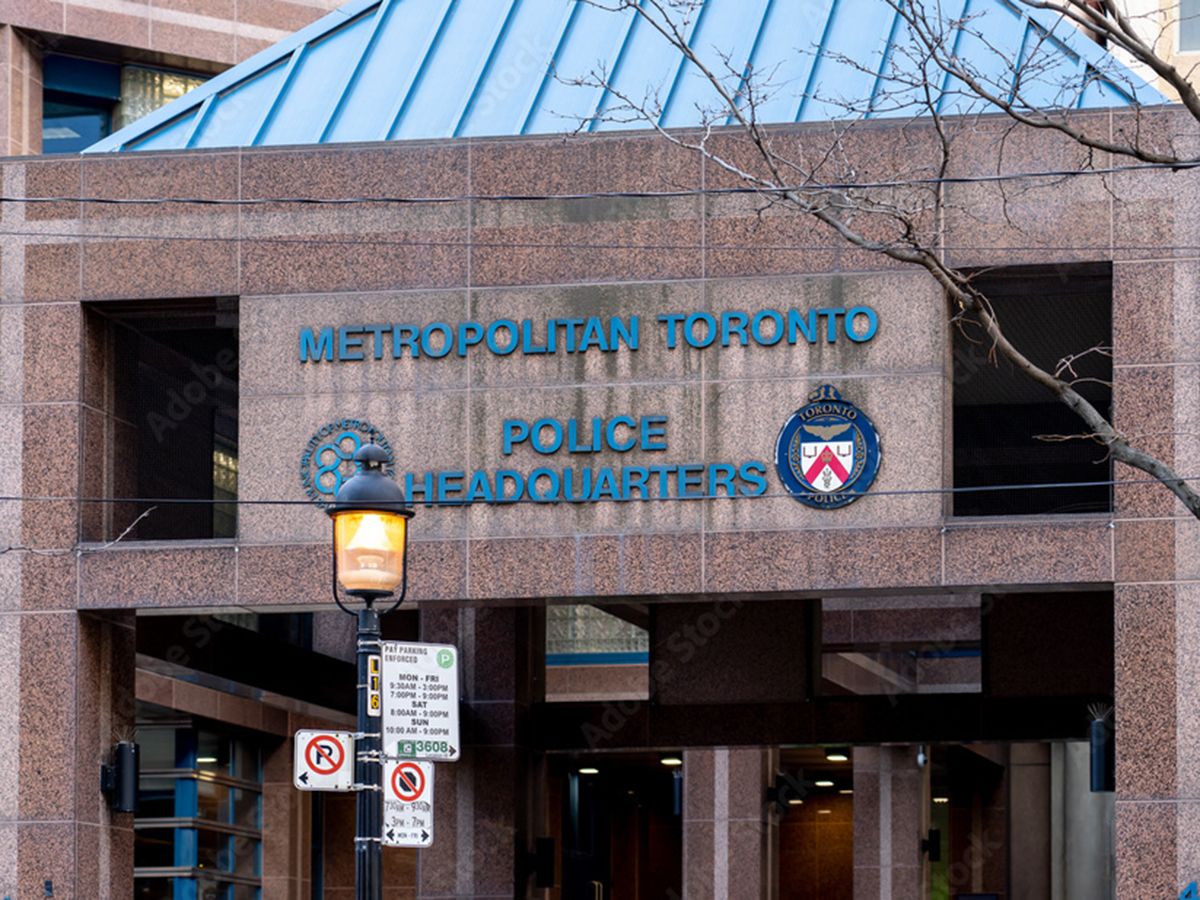
An investigative report by the Toronto Police Service (TPS) has found misconduct against five officers after a police-run podcast praised the post–October 7 surge of converts to Islam and was perceived to downplay Hamas support at anti-Israel rallies.
The Project Olive Branch Podcast had been launched by TPS as an outreach tool, to build trust amongst the Muslim community, according to police documents. It was to be “light hearted” and “foster open and engaging discussions.” The first episode aired without incident, the second, at 47 minutes, aired March 10, 2025 and received 142,000 views. It was reviewed by three supervisory colleagues, yet stirred controversy.
October 7 was framed as a catalyst for an “unbelievable” number of converts to Islam, said one host, using the term “reverts.” In another part of the show, an officer minimized how certain pro-Palestinian demonstrations are attended by individuals who support Hamas, according to complaints.
A police staffer reported hearing from Jewish community members that “expressed significant concern regarding language used by the officers, which they perceived as inflammatory. In particular, she stated there was concern that comments made during the podcast could be interpreted as characterizing the events of October 7 in a positive manner,” the investigation document said.
The discussion was “highly contentious and fell outside the scope of the podcast’s stated objectives,” the report said. The hosts “made controversial and inappropriate statements by publicly expressing personal views on a highly political issue while in police uniform.”
Within a day of airing on YouTube, police staff received “numerous complaints and negative social media reactions,” and due to the “volume and scope” of the concerns, a decision was made to remove the podcast from air. TPS issued a public apology through its website and social platforms. When informed about the removal of the show, one of the podcast hosts said the comments were “taken out of context.”
The report continued: “Although the comments may have reflected the officers’ personal views, they were communicated through an official TPS platform while both officers were in uniform. As a result, members of the public reasonably associated those views with TPS itself, leading some to question not only the impartiality of (officers involved) but also that of the TPS as a whole.”
Michael Teper, who filed a complaint through the Law Enforcement Complaints Agency (LECA), said regarding the report, that TPS “sat on it for six weeks, and only then did they communicate this to me.” The report is dated June 3, but the investigation document was received July 31.
He is, however, “pleased that the complaint was substantiated, which means that the complaint was ruled to have merit” finding that two constables and three sergeants, “were found in breach of their professional obligations under the law.” The president of the Canadian Antisemitism Education Foundation hopes that the “professionalism committee” will determine a fitting penalty.
Podcast hosts Cons. Farhan Ali and Const. Haroon Siddiqui, both serving as TPS Muslim Liaison Officers, declined to participate in interviews as requested by investigators, and refused to provide any show notes. “As a result, the investigation is unable to assess the officers’ intentions, motivations, or subjective understanding of the comments made during Episode Two,” the report said.
It also noted: “By engaging publicly on highly polarizing and politically sensitive topics, the officers failed to appreciate how their comments could alienate segments of the community and diminish confidence in their ability to remain fair and unbiased.”
The officers, having taken media training specifically through TPS, had learned that any commentary needed to “refrain from discussing sensitive or divisive issues, and carefully consider how public communications may affect perceptions of the Service,” and the report said the officers acted against this mandate.
The report found “sufficient evidence to substantiate misconduct” under section 10 (1) of the Community Safety and Policing Act, against all five named officers (the two hosts and three supervisors) connected to Project Olive Branch. It’s a finding that their conduct “undermines, or is likely to undermine, public trust in policing.”
The report concluded that “Public commentary on highly divisive political or geopolitical matters has the potential to erode public confidence in an officer’s ability to carry out their duties impartially and may cause members of affected communities to question whether they will be treated fairly.”
Teper said, in the future, an individual with “experiences of various communities and their sensibilities” should “take a red pen to any communications” that could cause offence.
“When officers in uniform make remarks that give the appearance that they or the police service itself are taking sides in a conflict, that makes the public confidence disappear, and it’s very difficult to earn back,” Teper said.
Matthew Taub, director of nonprofit advocacy group Unapologetically Jewish said the six weeks between completion of the report and its issuance to the complainant “is a problem.”
He also believes that the two podcast hosts declining to be interviewed in person “amounts to contempt” and even though the proceedings were not courts of law, “they have broken public opinion and did not fulfill their core duty, and (it) looks like they think they are above the law.”
He believes an immediate suspension should have been the consequence for their non-participation.
A non-Jewish leader allied to the Jewish community said he was pleased at the outcome.
“My impression here is that this is an important acknowledgement, that I hope serves as a warning to police, but also to others in positions of public service,” said Pat Johnson, director of Upstanders Canada Anti-Racism Society.
“It’s especially concerning in this case that it was the police, the very people who are responsible for ensuring the safety and security of individuals and communities, who had been engaging in discussions that exacerbate division in society, and put Jewish citizens at risk. But the encouraging thing is that this incident has been investigated, and action of some description is being taken.”
The less encouraging thing, “is that we’re hearing about literally hundreds of similar incidents taking place that are not receiving this sort of scrutiny in trade unions, in public schools and universities, in the medical sector, in the arts, and other places where incendiary language is creating unsafe workplaces.”
The Centre for Israel and Jewish Affairs said podcast was more than just insensitive.
“It raised serious questions about police impartiality, oversight, and public trust at a time when the Jewish community is experiencing unprecedented levels of antisemitism and increasingly looking to law enforcement for protection,” the group said in a statement posted to X.
“We expect accountability that reflects the seriousness of these findings, along with meaningful reforms to ensure this never happens again on an official Toronto Police platform.”
Our website is the place for the latest breaking news, exclusive scoops, longreads and provocative commentary. Please bookmark nationalpost.com and sign up for our daily newsletter, Posted, here.