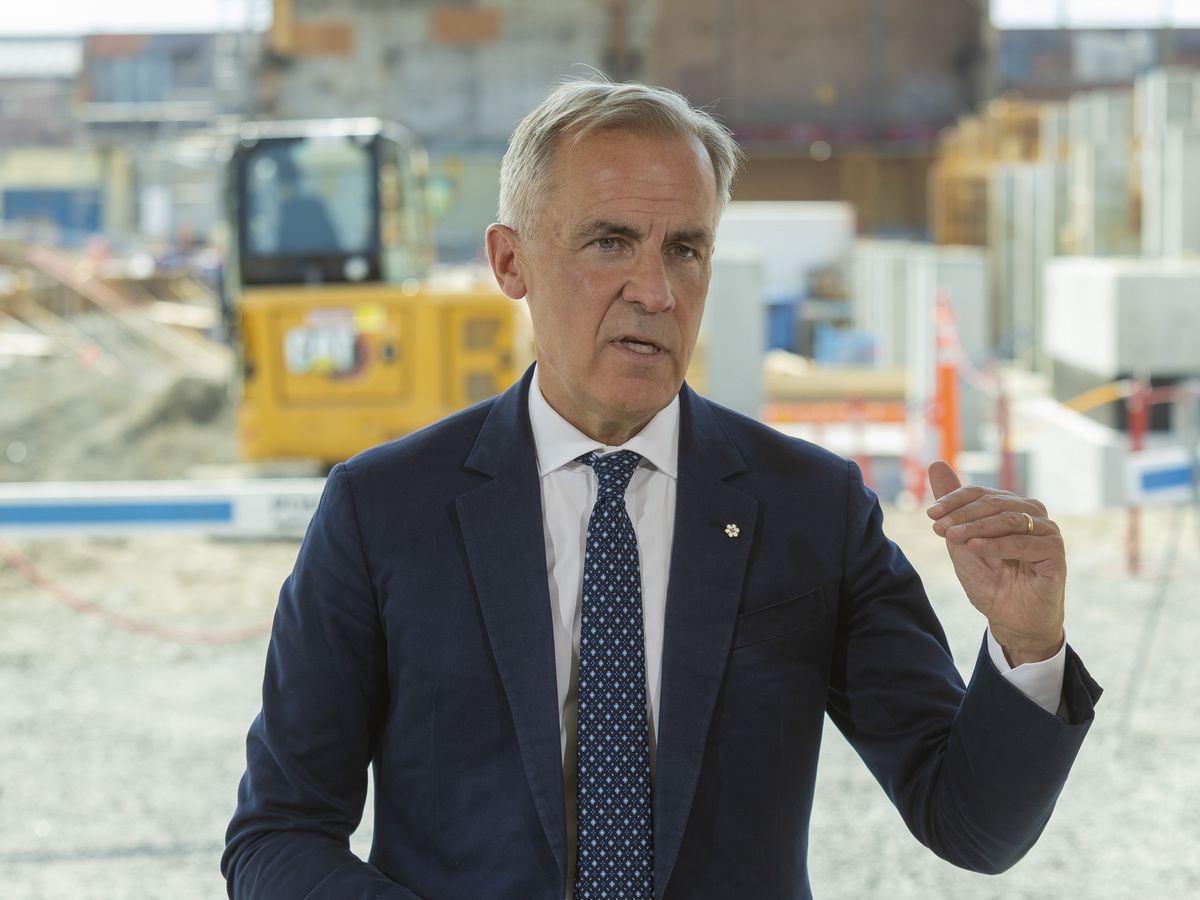
Prime Minister Mark Carney said President Donald Trump’s tariff on foreign aluminum is mostly being paid by United States buyers, adding there’s a “win-win” trade deal but only if both countries can address that sector in connection with the broader trade war .
U.S. aluminum prices have shot up since Trump placed a 50 per cent tariff on imports of the metal last June, Carney said, speaking to reporters outside a Rio Tinto Group aluminum facility in Quebec. Aluminum’s producer price index rose 52 per cent from June 2025 to June 2026.
“Some of that is international prices, but most of that is pass-through of the tariff,” Carney said. “That’s not a good situation for American companies.”
Carney said Canadian trade officials are using this context to argue that “we can discuss changes that are a win-win for the U.S. and Canada when it comes to the aluminum, steel and auto sectors, but they are connected.”
“We’re not interested in having a very targeted deal without connecting other sectors,” he said.
The U.S. does not produce enough primary aluminum to meet domestic demand, and relies heavily on foreign supply — especially from Canada, which accounted for 44 per cent of U.S. imports of the metal last year.
Last month Trump announced plans to cut tariffs on imports of aluminum down to 25 per cent for companies that build, expand or refurbish aluminum plants in the U.S.
50 per cent threat
Canadian trade officials are meeting with U.S. Trade Representative Jamieson Greer on Thursday to continue discussions ahead of an Aug. 19 deadline. Trump has threatened to put new 50 per cent tariffs on a range of Canadian goods if progress isn’t made on U.S. trade irritants by that date.
Canada’s objective is to eliminate or reduce U.S. tariffs on what Carney calls “strategic sectors,” particularly metals, autos and lumber. Those goods have been hit by U.S. duties imposed by Trump using Section 232 of the Trade Expansion Act, which allows for tariffs in the name of national security.
Greer and other U.S. officials have said they want to see Carney’s government address their complaints over Canada’s counter-tariffs on U.S.-made autos, trade controls on dairy, and the decision of provincial liquor agencies to take U.S. alcohol off their shelves.
If a deal isn’t reached, Trump has said the new U.S. tariffs will be applied to a wide array of Canadian-made goods, including milk, hockey equipment, beer and plywood.