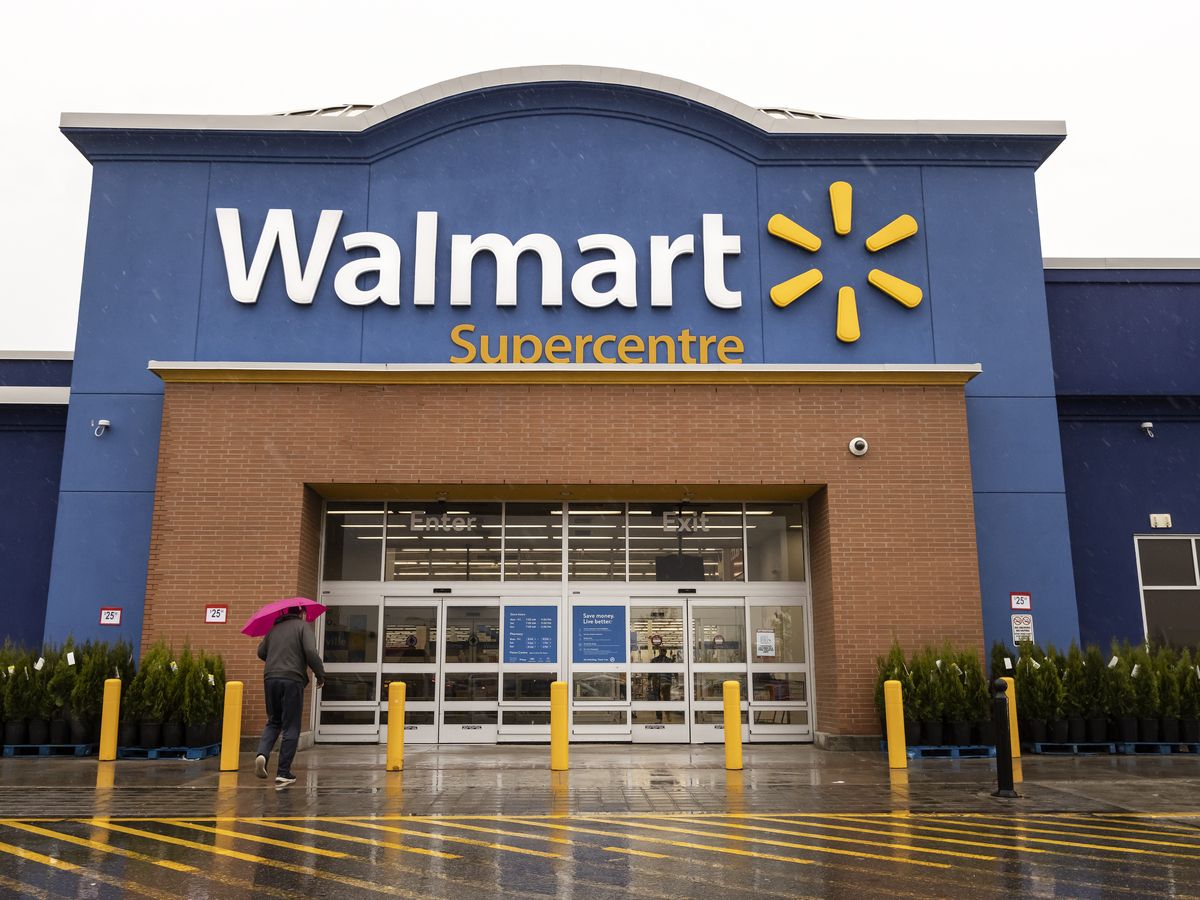
Walmart Inc. ’s quarterly sales fell short of expectations, a rare miss that’s likely to stoke concern about the leading big-box retailer decelerating alongside a slow-growing U.S. economy.
Sales at U.S. stores open at least a year, excluding fuel, rose 2.6 per cent in the second quarter, shy of the lowest analyst estimate compiled by Bloomberg. That rate of growth — hindered primarily by pricing pressure in its pharmacy business — is the slowest in more than six years.
Walmart shares fell as much as 7.4 per cent shortly after 7 a.m. Thursday in New York. The stock had risen 2.6 per cent this year through Wednesday’s close.
The results suggest it’s getting more challenging for the world’s largest retailer to maintain a faster growth rate as expectations from investors have risen. The earnings report also may foment anxiety about uneven economic signals and deteriorating consumer sentiment.
Walmart flagged that its pharmacy business weighed on U.S. sales due to federal negotiations that have led to lower drug prices. Shoppers spent less per trip during the quarter that ended in July compared with a year ago, though the number of transactions stayed at similar levels. E-commerce sales rose.
Despite difficulties in the latest period, Walmart raised its full-year guidance for sales and adjusted operating income. The company began receiving tariff refunds in the second quarter, which management will continue putting toward lowering prices.

Federal drug price negotiations affected Walmart’s health and wellness business more than expected, Chief Financial Officer John David Rainey said in an interview. While “transitory,” the issue is expected to persist into the next year, he said.
Excluding health and wellness, the company’s U.S. comparable sales rose 3.4 per cent. Walmart gained market share, including in grocery as it continued to lower prices of goods. As consumers face more pressure, Walmart has been “very intentional” with where it’s investing in price, Rainey said, pointing to beef as an example. Still, the retail environment remains competitive.
U.S. consumer health
Walmart’s status as the country’s biggest retailer makes it an economic barometer, attracting broader scrutiny from investors looking to gauge the health of the U.S. economy.
Shoppers have maintained spending at consistent levels in recent months despite ongoing concerns about inflation and geopolitical tensions. While many consumers are increasingly selective about their expenditures, they’re still on the lookout for good deals or unique products.
At the same time, lower-income households have pulled back amid elevated gasoline prices. Consumer sentiment also dropped for the first time in three months in August, while the labor market is showing signs of weakness.
Consumer spending has been consistent as households remain resilient, according to Rainey.
“We certainly see that choices are made,” he said. “That’s indicative of some of the trade-offs that consumers are needing to make, and they’re looking for value and convenience.” Back-to-college season was “exceedingly strong,” and the return to school season is in its early days as some schools start later this year.
Recent foodborne illnesses have weighed on demand for some items like packaged lettuce and strawberries, though the company expects that to improve in the coming months, Rainey said.
Walmart — a longtime favorite of bargain-searching shoppers — has expanded its online offerings in recent years and succeeded in attracting wealthier shoppers prioritizing convenience. The company’s non-retail businesses, which span from advertising to its third-place marketplace, also have boosted profit growth.
In the years after a pandemic-fueled boom in business, the retailer has invested across operations to spruce up its stores, assortment of products and digital services.
Under Chief Executive Officer John Furner, the Bentonville, Arkansas-based retailer has sought to maintain its focus on value while making online deliveries faster and using artificial intelligence more effectively across operations.
Walmart shares have retreated in recent months, partly on concerns that the company’s U.S. growth could decelerate. Comparable sales growth has now slowed for two straight quarters, and the retailer cautioned earlier this year that high fuel costs could squeeze earnings.
Rivals including Target Corp. have seen sales pick up as its turnaround efforts gain traction. Kroger Co. and Costco Wholesale Corp. meanwhile are lowering food prices to grab more share.