I don’t recall a time when we have had such inept and confusing economic and foreign policy in the United States.
The White House needs to revive the affordability program into the midterms, but has instead restarted a trade war with its largest trading partner. We have Iran and Oman working on a deal for a safe corridor in Hormuz, and yet the White House continues to enforce its naval blockade.
Kevin Warsh comes into the U.S. Federal Reserve at a time of nearly unprecedented dissension. There are more than just three voting dissenters who want to hike rates; it’s more like nine of the 18. Tightening into a 1.5 per cent demand growth environment — real gross domestic product (GDP) — when the supply-side potential is closer to two per cent is a prescription for a policy misstep.
Treasury Secretary Scott Bessent is going against his private market instincts with his bond buyback announcement. More to the point, it is going to create a conflict with Warsh. One thing is clear, however: Donald Trump and Bessent are determined to either cap or lower long-term rates.
Even if Bessent is successful in reversing the rise in Treasury yields, the question would be the extent to which this leads to a loss of investor confidence, especially foreign investor confidence, because with a depleted three per cent personal savings rate, another year of fiscal-deficit-to-GDP ratios of six per cent or more and a corporate sector that is now funding AI in the capital markets and causing a shift towards a negative corporate financing gap, the U.S.’s ability to sustain global confidence is elevated and rising.
The net national saving is near zero (about one-third the historical norm) while domestic investment is running at a record — the AI capex program alone is roughly half of U.S. GDP growth over the past year — which means the gap has to be filled by foreign capital. Ahhh, but at what price (or yield)? That is the issue since the balance of payments naturally always balances out. But, again, at what price?
There seems to be a fundamental lack of understanding and appreciation at the White House about what the driver of these higher bond yields has been over the past several months. While inflation expectations have remained tame, the impact of trade policy and the Iran conflict have caused measures of inflation uncertainty to hook higher, and that feeds into the risk premium in Treasuries.
Want market interest rates to go down? Declare a complete end of the war, even the economic war, with Iran. Want market rates to go down? Announce a fiscal austerity program. Want market rates to go down? Start to regulate the AI trade because it has been the demands on capital from the spending splurge that no longer is being funded by revenue streams that have bumped against the government’s relentless appetite for deficit finance.
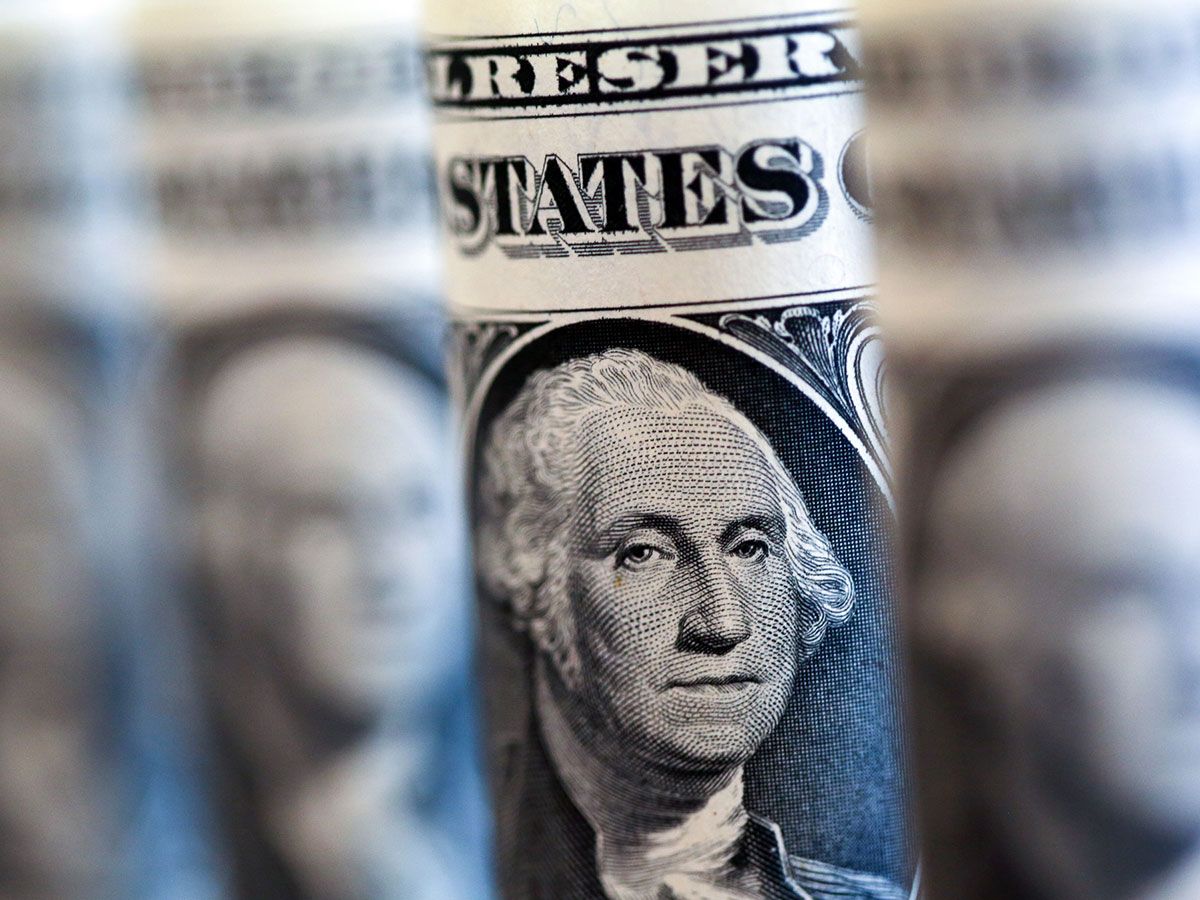
I’m not in the dollar debasement camp, but there are reasons to worry about a looming dollar bear market.
When the dollar strengthens, the black ink on the capital account is overwhelming the current account deficit, which is three per cent of GDP. But when the capital account shrinks, as in net capital inflows from abroad, that is the cause for the dollar’s descent. It all boils down to confidence.
No doubt, global money continues to flow into U.S. equities and corporate bonds, but the elephant in the room is the Treasury market, and you can see that investors, especially foreign central banks, are getting nervous. They have been net sellers of US$100 billion of U.S. bills, notes and bonds this year as of the end of June, which is a huge swing from net buying of US$100 billion in the same period a year ago.
We have a befuddled government policy on our hands. That is dollar negative. Debasement is just an emotional term, but the result is the same.
Then we have the Nov. 3 midterms, where the choice is Democratic socialism or crony capitalism. One thing is certain: we will be into a two-year period of fiscal gridlock, which is likely on its own to end up making the Fed’s job easier given the dampening influence this will have on any demand-led inflation.
But it will also mean a weaker dollar, if for no other reason than interest rate differentials will work against the greenback, especially against the yen and the euro.
All told, there is a fundamental and sustained loss of world confidence in U.S. policy at all levels. Fiscal. Trade. The failed war effort against Iran. The spat with Canada risks spiralling out of control, and the proposed 50 per cent tariff on Canadian automotive exports will only cause prices to surge and undercut critical supply chains.
Currency intervention through euro sales to buy yen and a contentious debt management program reveal a sense of the White House’s fear of bond yields continuing to ratchet higher. Central banks globally continue to diversify away from dollar reserves and into gold — now absorbing one-third of annual mined bullion production.
All roads from here lead to a dollar bear market that is more structural or secular in nature than merely cyclical. Keep in mind that there is also a valuation aspect to this because based on most measures, the euro is about 10 per cent and the yen more than 30 per cent undervalued relative to the greenback. Together, they make up a 70 per cent share of the DXY dollar index.
Make no mistake, this does not need to be cataclysmic or destabilizing. After all, we have seen no fewer than 15 U.S. dollar bear markets or corrective phases (more than a 10 per cent decline from a peak) since Richard Nixon closed the gold window in 1971.
Just because the U.S. dollar is the world’s reserve currency (for the time being) does not mean it has managed to escape down cycles. I strongly sense one is confronting us and we should be prepared.
David Rosenberg is founder and president of independent research firm Rosenberg Research & Associates Inc. To receive more of David Rosenberg’s insights and analysis, you can sign up for a complimentary, one-month trial on the Rosenberg Research website.