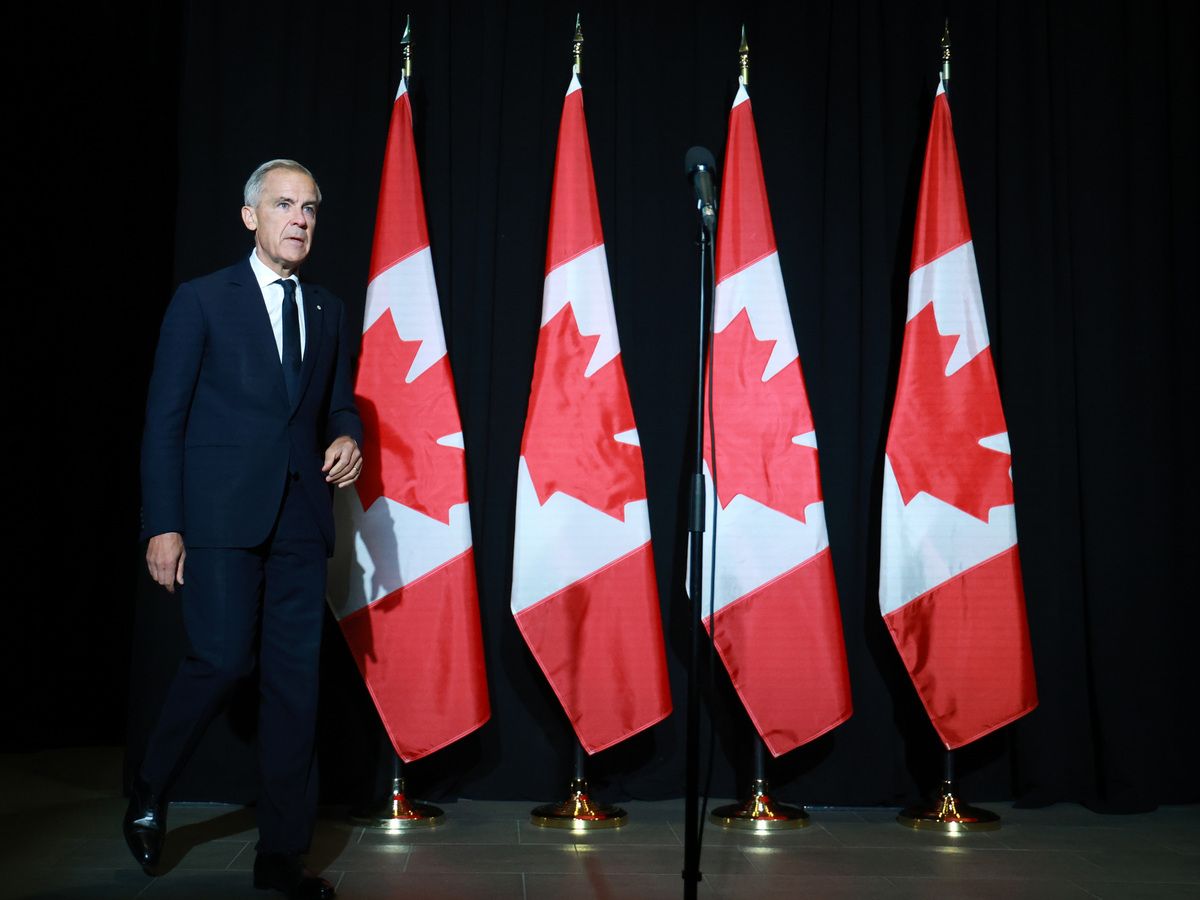
With the first Canada Investment Summit opening this week, Prime Minister Mark Carney is courting foreign investors to play a central role in financing this country’s major infrastructure and resource development projects.
Given the government’s target of $1 trillion in total investment spending over the next five years, outside capital is a must. But at that scale, foreign direct investment (FDI) risks compromising our ability to govern and control strategic assets, potentially undermining sovereignty and national security. To reduce those risks and better protect key technology and assets, our national security review guidelines need to be updated to include automatic trigger thresholds.
The Investment Canada Act has two frameworks for assessing deals. The “net benefit” review asks whether an investment is good for the country and economy, while the national security review asks whether it threatens our security. But while the net benefit review is triggered when the size of the company being purchased passes a specific threshold, the national security review has no mandatory thresholds, leaving the decision entirely to the discretion of the minister of industry, currently Melanie Joly.
Reviewing foreign investment has always been rooted in national security concerns, though sometimes by other names. The Foreign Investment Review Agency, created in 1973, screened ownership seen then as a U.S. challenge to sovereignty. The Investment Canada Act replaced it in 1985 with a narrower “net benefit” test, which includes consideration of “strategic assets” held by the company, and in 2009 Ottawa added the national security review, strengthened repeatedly since, most recently by Bill C-34 in 2024.
These approaches have all aimed at keeping sovereignty and strategic capacity in Canada, but they have blocked shockingly few purchases. In fifty years, only two foreign takeovers have been rejected on net benefit grounds.
Meanwhile, companies with strategic assets continue to be sold off. In August, RBC and BMO agreed to sell Moneris, which handles payments at more than 325,000 points of commerce, to American private equity firm Francisco Partners for roughly $2 billion, just under the $2.179 billion threshold that triggers an automatic net benefit review. Banking and payment infrastructure are sectors that legislation recognizes as vital to national security.
What is needed? A mandatory trigger. Any investment touching a strategic sector should require the company to notify and require the minister’s office to give reasons why it will not review, if it chooses not to. Parliament has already half-built such a mechanism. Bill C-34 created the power to require pre-closing filings in “prescribed business activities” in 2024, but two and a half years later the regulations defining those activities still have not been written. Bill C-8’s list of vital services and systems (nuclear, banking, telecommunications , pipelines and power lines, transportation, clearing and settlement) offers a starting point.
Peer countries already have frameworks that force government to consider a review of transactions in high-risk sectors. Australia requires notification for investments as low as $0 if they touch sectors relevant to national security. The U.K. requires notification for investments crossing certain ownership thresholds in sensitive sectors. Neither reviews every investment, but they force deliberation.
Canada has mandatory notification for any acquisition of an existing Canadian company, but not a specific national security notification. Currently, any national security review must be initiated by the minister’s office or by security services.
Clear thresholds for notification and recommendations to review will capture more of the harmful FDI Canada does not want and create more certainty for the investment we crave. Discretion still matters, but it should govern the outcome of a review, not whether anyone ever looks.
Matthew da Mota is director of research at The Canadian Shield Institute