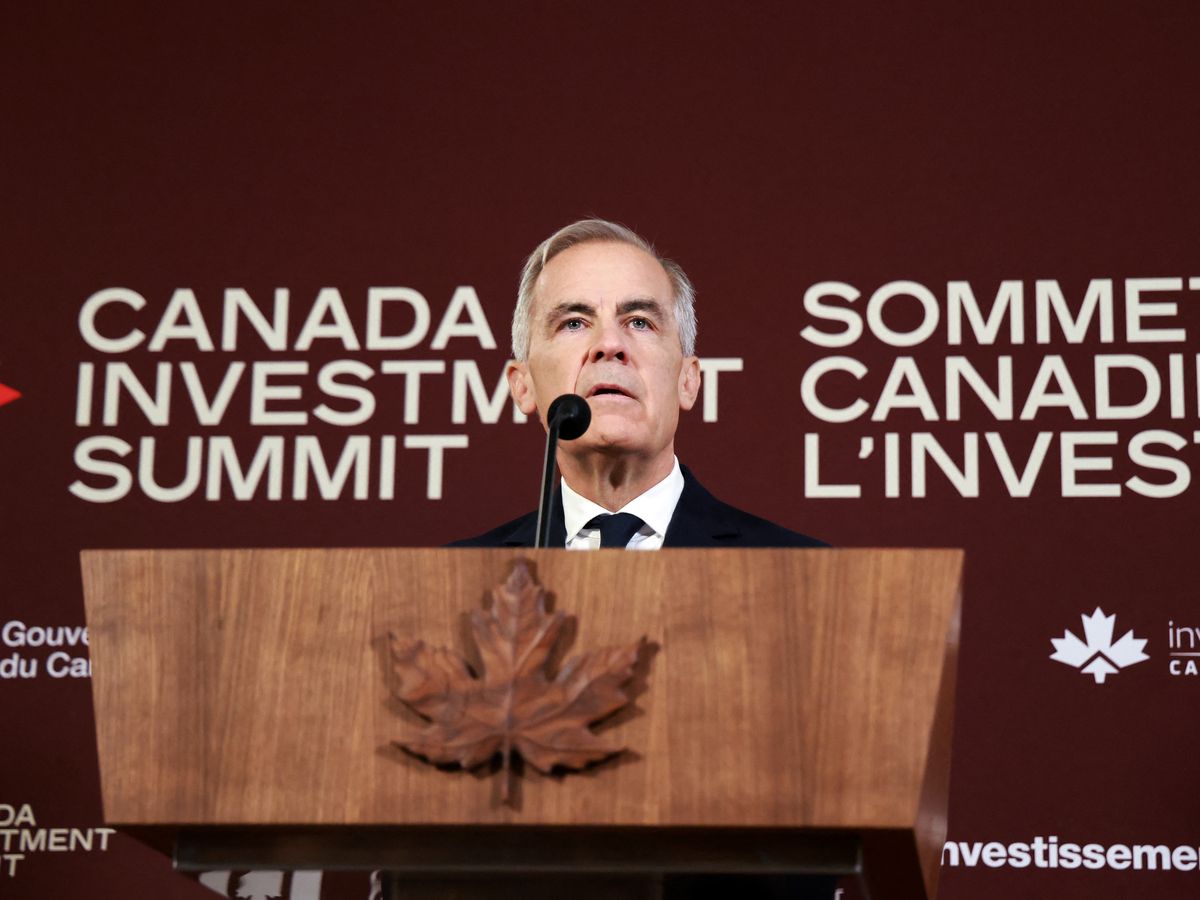
Prime Minister Mark Carney kicked off the Canada Investment Summit ‘s Tuesday program by announcing that Ottawa will seek private investment to operate the country’s four biggest airports and use the capital raised — expected to be in the “tens of billions of dollars” — to reinvest in other priorities.
“Following best practice in other countries, the Government of Canada will retain ownership of the underlying land and assets, but we will unlock their true value by bringing in new capital and expertise into their operations and growth,” Carney said in his opening remarks.
The four largest airports are Toronto Pearson, Vancouver International, Montreal Pierre Elliott Trudeau International and Calgary International.
“Canadian pension funds already invest successfully in many airports around the world,” Carney told the 250 invited guests from more than 25 nations at the inaugural summit for global investors. “It is time to bring that same expertise home to more directly benefit all Canadians.”
At a news conference following his remarks, Carney said the government would continue to own a piece of the airport “concession” in which private capital invests, through the Canada Strong fund, a sovereign wealth fund announced last spring. Concession arrangements are typically operating contacts that last for a decade or more.
Since the 1990s, not-for-profit airport authorities have operated Canada’s largest airports, which are part of the National Airports System. But many airports around the world have opened themselves to private capital and Canada’s large pension plans have been voracious investors.
Over the years, they have taken ownership stakes in airports including London’s Heathrow and Sydney Airport in Australia. The Public Sector Pension Investment Board still owns and operates international airports globally through its wholly-owned subsidiary AviAlliance.
Carney said there will be consultations “in the coming weeks” about the government’s plan to bring private capital into the big-city airports, but he did not lay out a timeline or say whether legislative changes would be necessary to move to an airport concession model.
He listed a number of uses for the billions in proceeds, including improvement to regional air services as well as investment in commuter transportation systems across the country and in national broadband, including in the Arctic.
The previous Liberal government began looking at ways to open the door to pension fund investment in airports — an asset class coveted by exactly the type of deep-pocketed long-term global investors the summit attracted — but Carney used the strongest wording in his first budget in November, saying the government would “consider options for the privatization of airports.”
Then, when the $25-billion Canada Growth fund was announced in the spring economic update, the government said it was looking into “alternative models of ownership,” and official hinted that airports could be among government-owned assets sold to private funds, with the proceeds used to pay for priority nation-building projects identified by the government — a concept known as asset recycling and popularized in Australia.
That country has also embraced a model for airports where long-term leases are transferred from government to private operators and concessions such as duty free and food terminal are contracted out.
A task force led by former Bank of Canada governor Stephen Poloz looked at ways around that and then, in March 2025, Transport Canada laid out interim private investment paths that would be possible under current rules, without changing legislation, such as through commercial subleases and as minority investors in share-capital subsidiaries. The policy statement suggested such development on airport lands could include terminals, hotels and shopping centres.
When it became clear that the path to privatization was being studied, IFM Investors, which is leading Australia’s delegation at the summit in Toronto, reached out to showcase some of the unique structures its investment teams have used to acquire 17 airports around the world could work in Canada.
Manchester Airports Group in the United Kingdom, for example, is jointly owned by Manchester City Council and funds managed by IFM, a structure that calmed privatization concerns by leaving a stake in public hands.
A previous look at selling major Canadian airports 10 years ago was shelved amid concerns about opposition from labour groups and voters.
At Tuesday’s news conference, Carney said times have changed.
“We are living in different times…. We need to be smart with how we use the assets we have,” he said.
“There’s an opportunity here to provide better passenger service, to reinvest in our regional airports, which are underinvested in, to provide that better experience (and) to take some of the proceeds as well to reinvest in other forms of transportation infrastructure.”
Ahead of the summit, IFM polled Canadians to get a sense of their acceptance to pensions funding key infrastructure and found that Canadians were largely supportive of private capital to fund better and more modern infrastructure. Roughly two-thirds of the 3,000 polled Canadians would be open to Australian pension funds operating existing Canadian infrastructure.
But the Canadian Labour Congress put on a statement Friday warning that the government’s airport plan will cost Canadians.
“Private investors don’t put billions into airports unless they expect to make billions back,” Lily Chang, secretary-treasurer of the CLC said in a statement.
• Email: bshecter@nationalpost.com