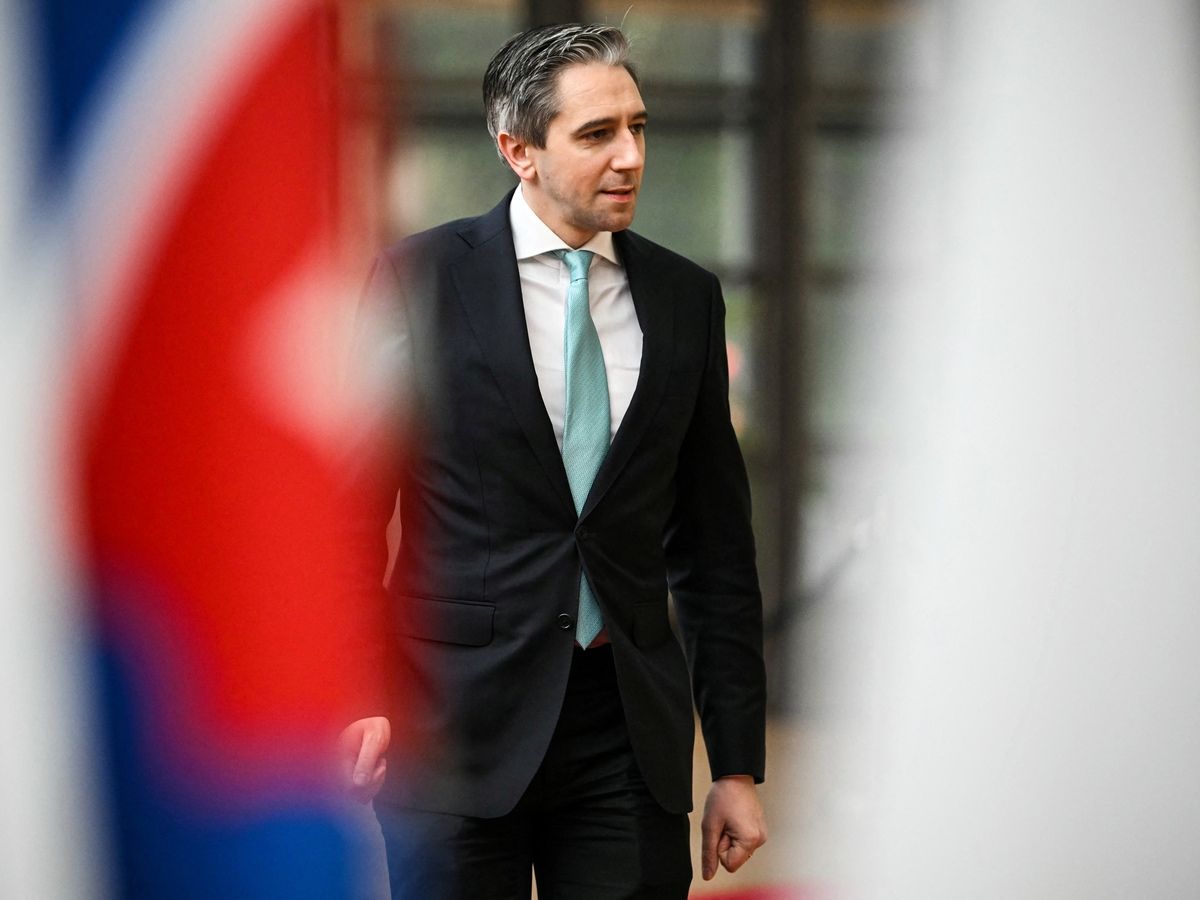
Irish Finance Minister Simon Harris played down worries that U.S. President Donald Trump may impose tariffs on the European Union over Canada’s associate member status with the bloc.
“I don’t think we should overstate that level of concern,” Harris said ahead of an informal meeting of EU finance ministers in Dublin. “I think it’s always very important to hear all of President Trump’s comments rather than for them to be selectively quoted.”
Trump on Thursday floated hitting goods imported from the EU with fresh tariffs or even cutting off some trade if he determined that a push to make Canada a potential associate of the bloc was harmful to the United States. He also said that he wouldn’t react if the move is well-intentioned.
European Commission President Ursula von der Leyen this week proposed Canada should become the first associate member of the EU, saying she would like to work with Prime Minister Mark Carney on the idea.
The fact that Finance Minister Francois-Philippe Champagne will attend the meetings is a positive sign, Germany’s Lars Klingbeil said ahead of the event.
“I think something is growing here that together can have a bright future,” he said. “The EU and Canada are strategically important partners.”
Canada’s government has made clear it is eager to boost economic ties with the rest of the world, including the EU, in a multi-year strategic shift to reorient trade flows more to the east and west, rather than being primarily focused southbound toward the U.S.
“This has nothing to do with the United States,” Harris said. “This is about the European Union and Canada both deciding they want to have a closer working relationship on areas of mutual interest. Something that is a positive and stable and helpful development in terms of the world economy.”
Klingbeil also noted that Trump had threatened the EU even before the Canada association talks came up. “We should stop worrying too much about how Donald Trump feels.”
The sentiment was echoed by Lithuanian Finance Minister Taurimas Valys. “We’ve learned that we have to wait and see with these things.”
With assistance from Jorge Valero, William Horobin, Andrew Langley, Mark Schroers and Alexander Weber