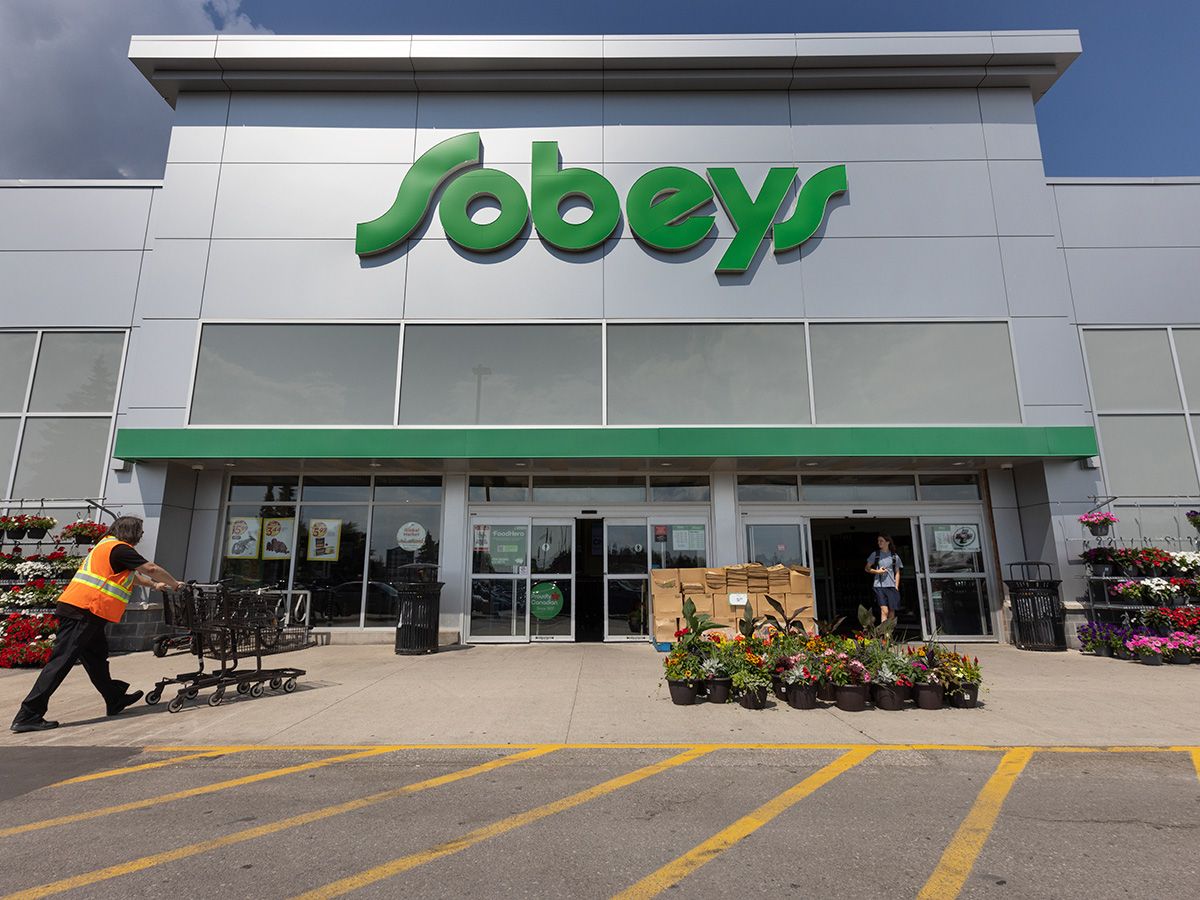
The grocery store chain that operates under banners such as Sobeys, Farm Boy and IGA on Tuesday agreed to limit its use of commercial lease conditions that make it difficult for others to open and operate competing grocery options.
The agreement with the Competition Bureau, which was registered with the Competition Tribunal, makes Empire Co. Ltd.’s commitments legally binding and enforceable and could potentially help bring down grocery prices.
“The agreement with Empire removes barriers to competition and will support new entry and increased competition from retailers selling everyday essential items,” Jeanne Pratt, interim commissioner of competition, said.
She also said the watchdog is committed to identifying and addressing barriers that limit competition across the food supply chain so that Canadians can get lower prices and greater choice.
Jennifer Quaid, a professor at the University of Ottawa’s Faculty of Law, said competition authorities have been looking into use of covenants and exclusivity clauses in commercial leases under the umbrella of “property controls” for a few years.
Such structures can prevent landlords from leasing space to another tenant that competes with an existing tenant or place limits on what or how products can be sold.
“They’re a problem in some markets and that’s why the bureau wants to address them and go after them,” she said, adding that competition authorities are also monitoring the grocery and real estate operations of Loblaw Cos. Ltd.
But Quaid said the agreement with Empire is not a “magic bullet” for addressing price concerns.
“It’s one piece in a larger puzzle of building conditions in which it’s possible to have multiple players in the grocery market that exert some price pressure to keep prices down on some products,” she said.
The bureau in June launched an ongoing examination of competition in Canada’s food supply chain in response to persistent high prices.
Food prices rose along with a general inflation trend after the COVID-19 pandemic, stemming in part from pent-up demand after months of restrictions. Inflation has since returned to the Bank of Canada’s target range of two per cent to three per cent, but food prices remained elevated.
However, Statistics Canada said grocery price growth in August increased at a slower pace than the all-items consumer price index for the first time since July 2024.
The price of food purchased from stores rose 2.8 per cent in August from a year earlier after increasing by 3.1 per cent in July. Prices for dairy products led the deceleration.
Quaid said the agreement between competition authorities and Empire is a positive step compared to going to court to fight about the use of property controls.
Empire, however, had already made commitments to change the way it used such controls.
The grocery chain issued a statement in July that said restrictive covenants and exclusivity clauses are widely used across various industries and can support investment and sustain developments, especially in underserved communities.
But it committed to limiting their use, such as not enforcing or entering into any radius clauses to allow for increased retail activity surrounding its store sites.
Empire’s commitments, which also included limiting the geography, product scope and duration of exclusivity provisions in all future grocery store leases and not enforcing or entering into exclusivity clauses restricting specialty food retailers such as butchers and bakeries, were formalized this week through the agreement with competition authorities.
John Tyhurst, a former civil litigator who was lead counsel for the commissioner of competition in the merger of Rogers Communications Inc. and Shaw Communications Inc., said the agreement is a positive step for consumers in what continues to be a highly concentrated grocery market that features many other barriers to entry.
“The sector would benefit from the emergence of new players and entrants,” he said, adding that other barriers include economies of scale and the buying power of the incumbents.
“With affordability on everyone’s mind, the bureau evidently is acutely aware of this.”
bshecter@postmedia.com