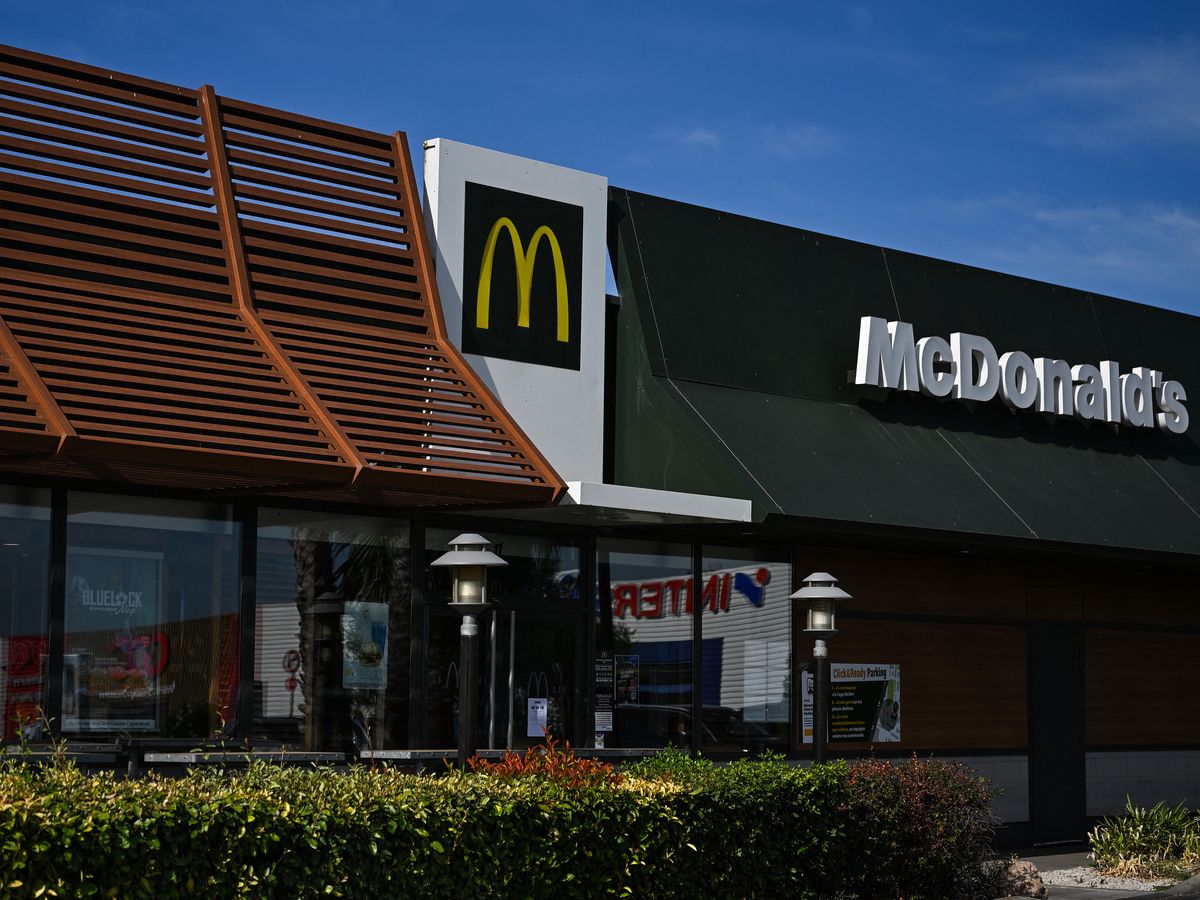
McDonald’s Corp. is earmarking roughly US$8.5 billion to help franchisees implement a multiyear plan to serve better food, improve service and make restaurants easier to run.
The company will deploy the money — a mix of capital support and rent relief — through 2036, according to a statement Wednesday. The funds will be used for modernizing restaurants, adding technology and other improvements, as part of a plan unveiled earlier this year.
McDonald’s franchisees, under pressure from rising costs on beef, labour and equipment, are being asked to spend more than US$1 million per store on average on remodels and other upgrades under the plan. The assistance will offset part of the cost. The chain has about 44,000 franchised locations worldwide, roughly 95 per cent of its total.
The announcement comes just days after one of Wendy’s Cos. biggest franchisees declared bankruptcy, highlighting how rising competition for fast-food spending is squeezing operators.
McDonald’s shares fell 4.8 per cent to the lowest level since 2022. The drop brings the stock’s year-to-date decline to 22 per cent.
The company is looking to counteract a slowdown that’s becoming more pronounced. During the company’s investor day event at its Chicago headquarters, Chief Financial Officer Ian Borden said that U.S. sales will be “slightly negative” in the third quarter. That follows slower-than-expected growth in the previous period.
Chief executive Chris Kempczinski said industry traffic growth in many markets will be flat just as inflation remains elevated. “To succeed in that environment, growth must come from capturing greater share,” he said.
The burger chain is facing fierce competition from emerging brands focused on chicken and beverages, as well as a resurgent Burger King.
In an interview, Kempczinski said that the US$8.5 billion in funds over 10 years are necessary to reach the returns on investment that the franchisees and the company target. He said franchisees expect returns of at least 20 per cent, and the parent seeks returns in the high teens.
“It’s a little bit of ‘put your money where your mouth is,’” he said.
‘Next’ initiative
McDonald’s has said its initiative, called “Next,” aims to turn the chain into more than a stop for a quick, cheap meal. The idea is to redesign restaurants to be more open and bring back playful elements lost in previous remodels, while streamlining kitchens so staff can work more efficiently.
It’s also focusing on improving its food offerings and training staff on how to provide better service through initiatives like always greeting customers. More personalized marketing is in the works, too, such as targeted breakfast rewards.
McDonald’s has said missteps with its value offerings drove weakness earlier this year after some deals didn’t resonate with customers. Moreover, restaurants were overwhelmed by too many product launches, resulting in slower service and falling customer satisfaction ratings.
Some marketing campaigns, including meals tied to the World Cup, fell short of forecasts. McDonald’s is going to reduce the number of short-term promotional campaigns, executives said on Wednesday.
McDonald’s last month replaced its longstanding U.S. chief with company veteran Skye Anderson to bring “focus and urgency” to its home market. The company is simplifying its marketing calendar and promoting “proven” deals, such as its Extra Value Meals. It’s also working on a “longer-term” value strategy, Bloomberg News has reported.
The company expects these strategic fixes to address weakness in the U.S., Borden said in an interview, while the “Next” plan should set up the company for long-term growth. Borden said franchisees can afford the investment with their current cash flow as well as support from McDonald’s and expected productivity savings.
“Even if that cash flow has been a bit pressured, it’s demonstrably higher than anyone else in the industry by far,” Borden said.
In the U.S., McDonald’s usually owns locations and charges franchisees rent, in addition to royalties and other fees.
As part of “Next,” McDonald’s is looking to make restaurants more efficient, which it said could save the average U.S. restaurant some US$100,000 in annual cash flow. One of its initiatives is a generative-AI system called ArchIQ. McDonald’s has previously tested automated order-taking in its drive-thrus.
Chicken, drinks
McDonald’s said it’s looking to increase its market share in chicken and beverages by 1.5 percentage points by 2030, two red-hot categories in the U.S. Newer brands such as Raising Cane’s and 7 Brew are expanding across the country, forcing McDonald’s to improve its own offerings to compete.
The company has a high-teens market share in chicken and a high-single digits share in beverages, Global Chief Restaurant Experience Officer Jill McDonald said on Wednesday. It’s the second-largest player in coffee globally, she said.
The chicken business is worth about US$30 billion, she added. McDonald’s is planning to launch grilled-chicken sandwiches and wraps while expanding a test of hand-breaded chicken.
McDonald’s is also looking to offer more options for users of GLP-1 weight-loss drugs and is exploring bowls, grilled chicken and egg bites to expand its protein options. The company said that 84 per cent of households with a GLP-1 users visit its restaurants, and those customers tend to buy McNuggets, Filet-O-Fish sandwiches and Happy Meals.
Meanwhile, training on hospitality and to ensure staff delivers food that’s up to the company’s standards will start Oct. 5. McDonald’s will also roll out changes to cooking procedures by next year.
Financial targets
The company also laid out a range of financial targets on Wednesday. It sees new restaurants contributing about 2.5 per cent to total sales growth in 2027 before moderating to about two per cent by 2030. Operating margins will be in the low-to-mid-50 per cent range by 2030, while free cash flow conversion should come in the mid-to-high-80 per cent range.
In response to slowing consumer demand, McDonald’s earlier this year pushed back its target of reaching 50,000 total restaurants to 2028, from the end of 2027 as promised at its last investor day three years ago. The company also cited rising construction costs.
With assistance from Karen Leigh