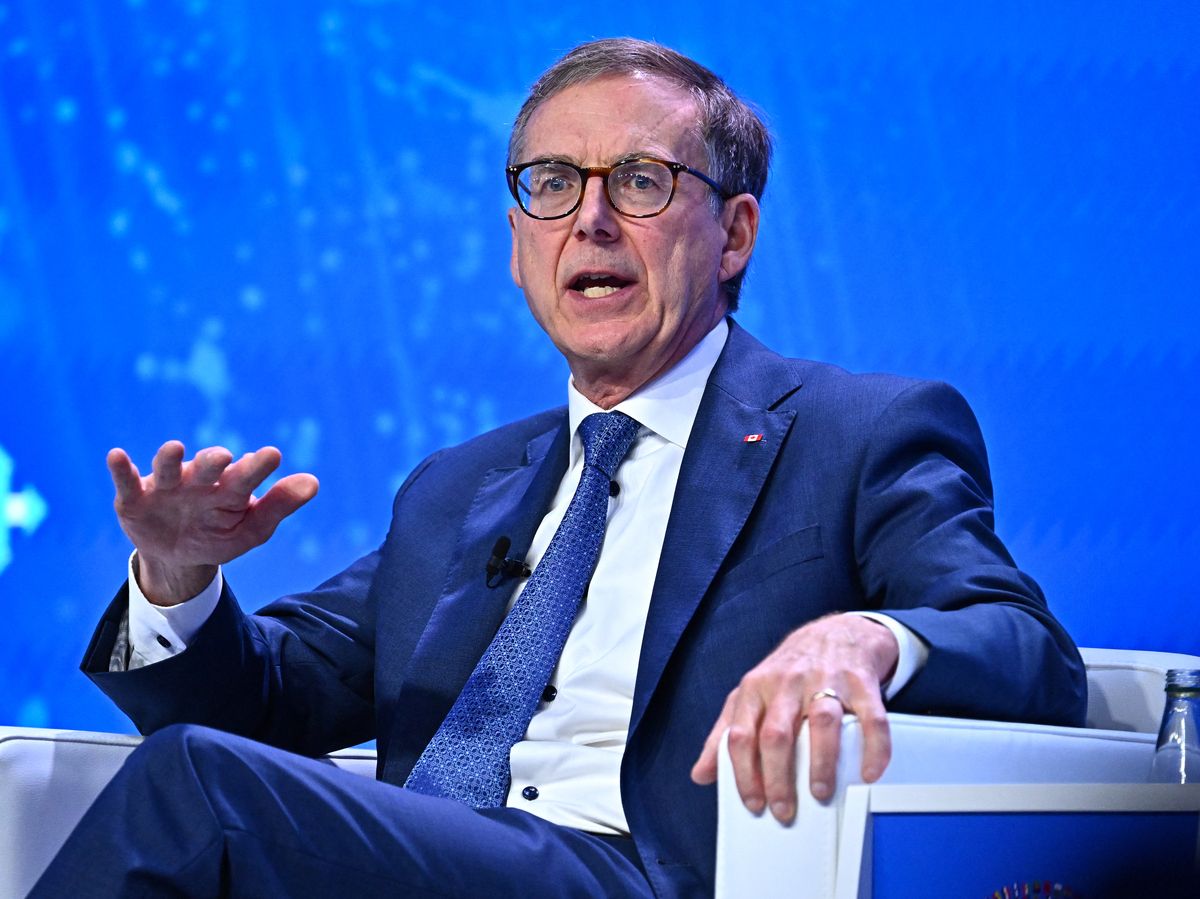
Economists are bracing for the possibility of a Bank of Canadainterest rate hike on Wednesday, following a sudden shift in tone that suggests the central bank is growing more concerned about persistent inflation .
The Bank of Canada has held its policy rate steady at 2.25 per cent for more than 11 months, and was widely expected to stay on the sidelines for the rest of the year.
But a number of economists are predicting the bank will hike this week, with markets pricing in an 80 per cent chance that rates will rise for the first time since 2023.
Economists at Desjardins Group are among those who have changed their view. As recently as Sept. 22, the bank was projecting a hold, but new forward-looking data ultimately led them to change their minds.
Roughly half of firms surveyed in the central bank’s latest Business Outlook Survey said they planned to pass on some or all of their cost increases related to the Iran war and tariffs to consumers, and firms that have passed on some of the earlier cost increases planned to continue to do so.
Elevated energy prices and Canadian retaliatory tariffs could further add to inflationary pressure, while U.S. tariffs are expected to dampen economic growth for the rest of the year, all of which also contributed to Desjardins’ decision.
The firm now expects the central bank to raise its overnight rate to 2.5 per cent on Wednesday.
“Both businesses and consumers increased their expectations for future inflation…. That led us to the conclusion that the Bank is going to be hiking rates on Wednesday of next week,” said Randall Bartlett, Desjardins’ deputy chief economist.
“Businesses can only eat those higher costs for so long…. The Bank of Canada certainly wants to get ahead of that by raising rates and tamping down on domestic demand, which has been strong in spite of all of these headwinds, and ultimately cooling off some parts of the economy to offset some of the heat that we’re seeing on inflation from other areas.”
Nathan Janzen, assistant chief economist for RBC Economics, said the recent inflation data alone wasn’t enough to compel its economists to revise their forecasts, especially since core measures have remained relatively stable.
Instead, it was a new “hawkish” tone from Bank of Canada in recent communications.
Bank of Canada governor Tiff Macklem ‘s recent comments from the sidelines of the International Monetary Fund meetings signalled that the central bank’s economic outlook has changed since July because energy prices have remained higher than expected. Officials have found it increasingly difficult to look through the direct impact of higher energy prices, and they are prepared to adjust the overnight rate as needed to keep inflation expectations anchored.
RBC Economics’ now projects a rate hike to 2.5 per cent on Wednesday, instead of remaining on hold until the end of 2026.
“The expectation next week is that they’ll raise it by a quarter (percentage) point, and that likely won’t be the last hike,” Janzen said.
However, RBC said a hike wasn’t a lock: There is still a chance central bank will hold interest rates because the economy is still quite weak and there is sufficient slack that will slow inflation passthrough.
“(Central bank officials) have to think about what inflation is going to be in the future when they make their policy decisions.… If they’re too slow to hike, they can let inflation pressures build unnecessarily, and if they’re too fast to hike, they can unnecessarily slow the pace of growth in the economy, and it looks like they’re leaning towards the former,” Janzen noted.
Andrew Grantham, executive director and senior economist at CIBC Capital Markets, said it may be a bit early for an interest rate hike. The economy hasn’t fully recovered after a sluggish 2025, and real gross domestic product growth is expected to slow to an annualized rate of two per cent in the third quarter of 2026 and under one per cent in the fourth quarter.
Despite that, CIBC’s forecasts now say the central bank may hike rates to 2.5 per cent in October and 2.75 per cent in December or January to bring the key interest rate to a neutral rate, where monetary policy is neither restricting nor stimulating the economy.
“(Macklem was) definitely hawkish relative to what economists and financial markets were forecasting prior to those comments. Most people had assumed, given the uncertainty over trade and the impact that would have over the fourth quarter, along with the fact that core inflation measures haven’t picked up, that the Bank of Canada would need to raise interest rates in December or January,” he said in an interview.
“It would surprise us if the governing council doesn’t raise rates, given those comments…. The growth outlook isn’t impacting their decision. They are much more worried about inflation at the moment rather than some of the the quarterly volatility in terms of GDP.”
• Email: ptran@postmedia.com